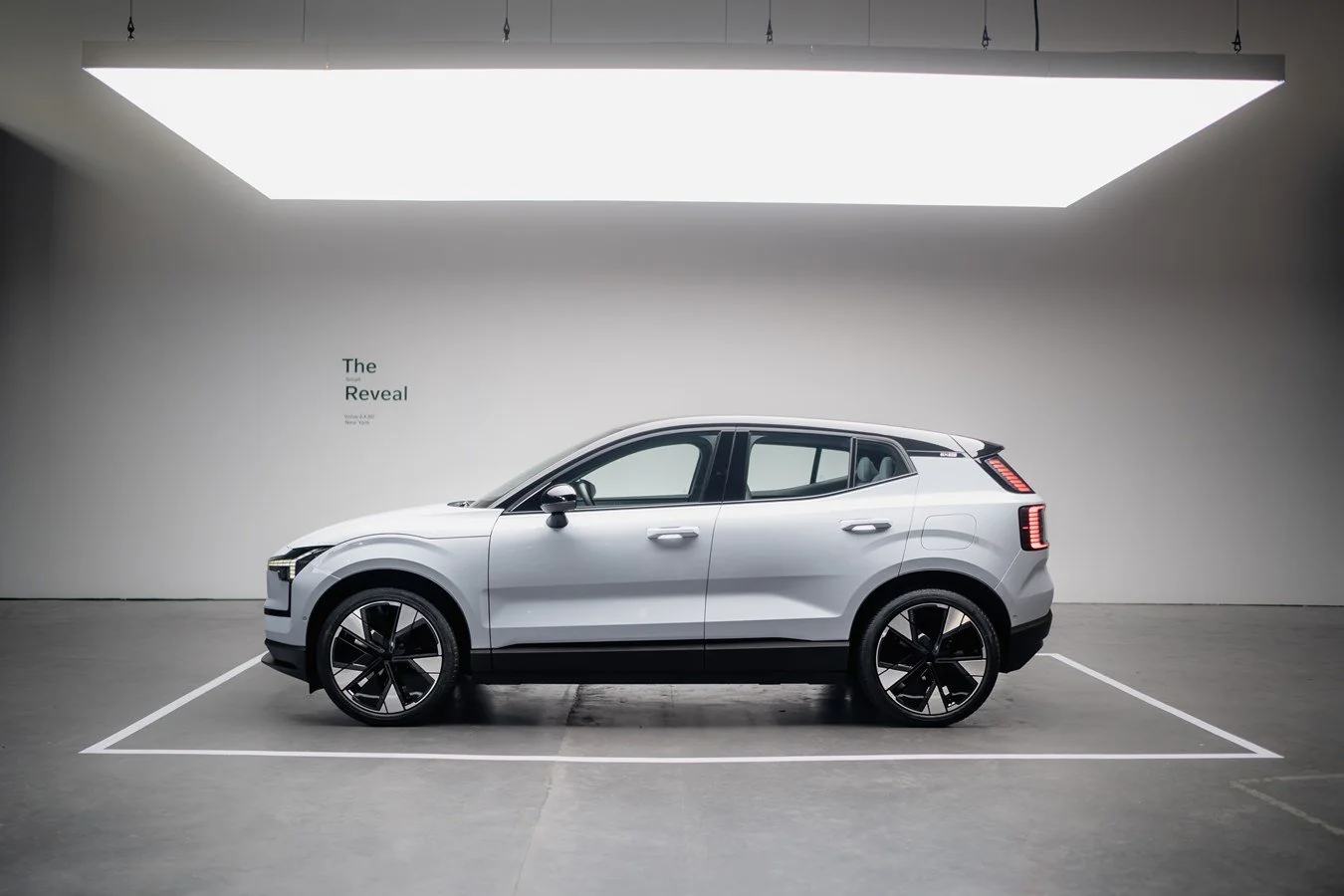
Volvo EX30 US exit marks a surprising turn for one of the most promising small electric crossovers in recent years. Despite strong specifications and an attractive price point, Volvo has decided to discontinue the EX30 in the United States after this model year, signaling deeper challenges within the evolving EV landscape.
The decision affects both the standard model and the Cross Country variant, yet Volvo will continue selling the EX30 in markets like Canada and Mexico. This contrast immediately points to structural issues specific to the U.S. market rather than flaws in the vehicle itself. The EX30 entered the market with strong expectations, but external pressures quickly reshaped its trajectory.
On paper, the EX30 looked like a winning formula. As Volvo’s most affordable electric vehicle, it started just above $40,000. Buyers could choose a dual-motor version producing up to 422 horsepower, making it one of the quickest options in its class. The EPA estimated range of roughly 253 to 261 miles made it practical for daily use. Its compact size, modern styling, and strong performance positioned it perfectly for urban drivers seeking a premium yet accessible EV.
However, the Volvo EX30 US exit reflects how real-world conditions can override strong product fundamentals. The biggest challenge came from geopolitics and trade policy. The EX30 relies on an EV platform closely tied to Chinese manufacturing. This became a major hurdle when the U.S. government imposed steep tariffs on Chinese-built vehicles. These tariffs significantly increased costs, making it harder for Volvo to maintain competitive pricing.
Volvo attempted to adapt by shifting production for the U.S. market to Belgium. This move aimed to bypass the direct impact of tariffs on Chinese imports. Yet, additional tariffs and broader trade measures continued to affect costs. As a result, the financial viability of selling the EX30 in the U.S. weakened further.
At the same time, changes in EV incentives added more pressure. The removal of federal EV tax credits for imported vehicles, followed by broader policy shifts, reduced the affordability advantage that electric cars once held. For a model like the EX30, which depended on competitive pricing to attract buyers, this change had a direct impact on demand.
Sales numbers reflected these challenges. Volvo sold just over 5,400 units of the EX30 in the U.S. during 2025. While not insignificant, this figure fell short of expectations for a model positioned as a high-volume entry point into Volvo’s electric lineup. The combination of tariffs, policy changes, and market timing created conditions that even a well-designed vehicle could not overcome.
The Volvo EX30 US exit also highlights a broader issue within the American EV market. Smaller electric crossovers face a tougher path compared to larger, more established models. Many buyers still prioritize range, size, and brand familiarity when choosing an EV. Compact models, even when well-priced, often struggle to gain traction unless supported by strong incentives and favorable policies.
Timing played a crucial role as well. The EX30 launched during a period of uncertainty for the EV industry in the United States. Policy changes, fluctuating incentives, and shifting consumer sentiment created a volatile environment. Under these conditions, even strong products can fail to achieve their potential.
Despite this setback, Volvo remains committed to its electrification strategy. The company will continue offering models such as the EX40 and EX90 in the U.S., both of which target different segments of the market. Additionally, the upcoming EX60 is expected to strengthen Volvo’s presence in the mid-size electric SUV category. These models may benefit from more stable production strategies and better alignment with market demand.
The Volvo EX30 US exit does not signal a retreat from electric vehicles. Instead, it reflects a recalibration of strategy in response to real-world constraints. Automakers across the industry face similar challenges, particularly when navigating global supply chains and regional policy differences. Many have already adjusted their EV plans to account for these complexities.
For consumers, the exit underscores how external factors shape the availability of vehicles. A car’s success depends not only on design and performance but also on economics, policy, and timing. The EX30 met many of the criteria for success, yet it entered a market that could not fully support it under prevailing conditions.
Looking ahead, the lessons from the Volvo EX30 US exit will likely influence how automakers approach future launches. Companies may prioritize localized production, diversify supply chains, and align more closely with regional regulations. These adjustments could help prevent similar outcomes and ensure that promising models reach their intended audience.
In the end, the EX30’s story serves as a reminder that innovation alone does not guarantee success. Market readiness, policy alignment, and strategic execution all play critical roles. While the EX30 will continue to find buyers in other regions, its departure from the U.S. highlights the complex realities shaping the future of electric mobility.