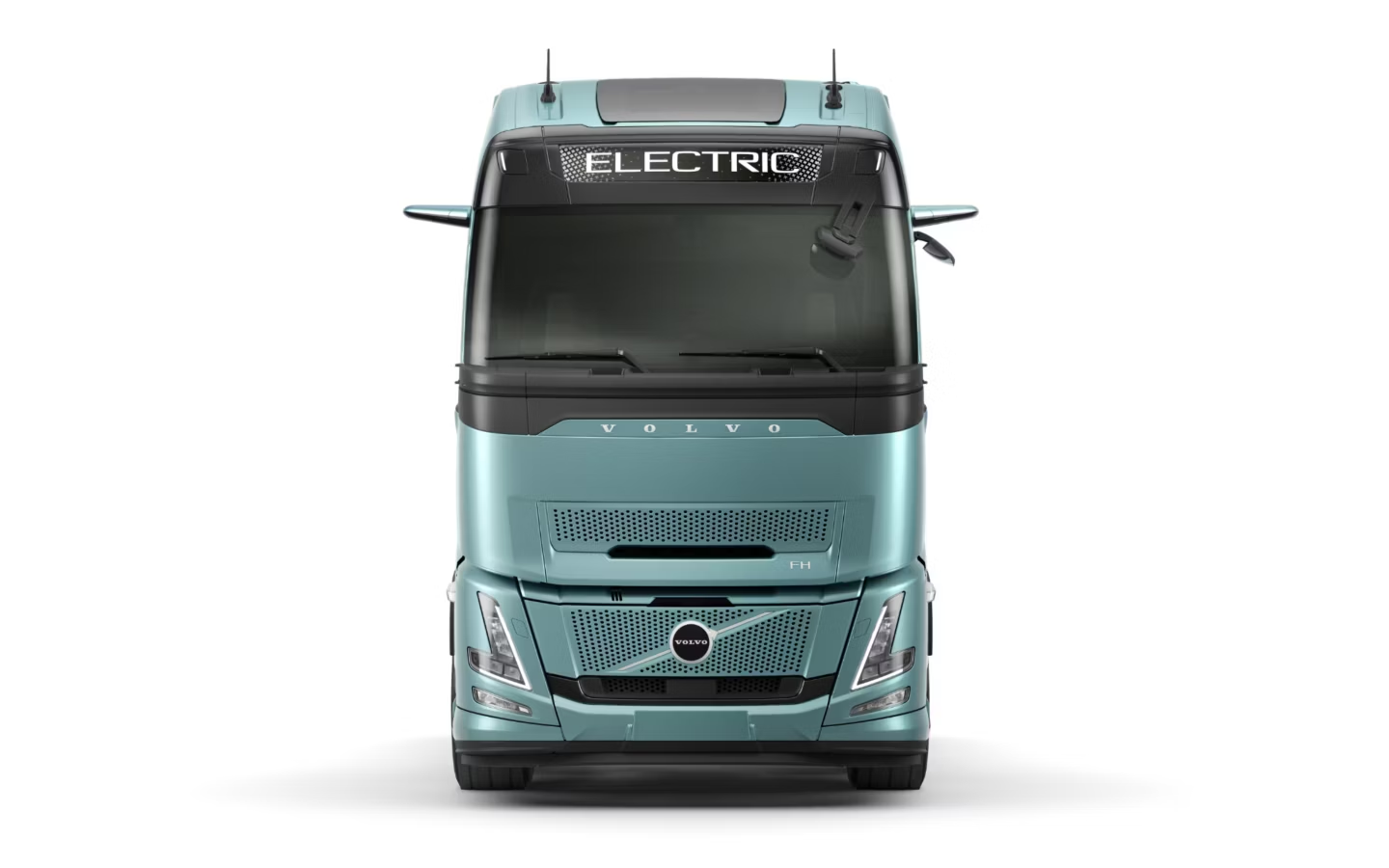
The latest Volvo FH Aero Electric marks a major step forward for long-haul electric transport, as Volvo Trucks pushes the limits of range and performance. With a new extended-range version now capable of up to 435 miles on a single charge, the company is addressing one of the biggest barriers to electric trucking.
This upgraded Volvo FH Aero Electric delivers roughly 60 miles more range than its standard counterpart. The improvement comes from a combination of enhanced aerodynamics, a larger battery system, and a redesigned electric drivetrain. As a result, the truck becomes more viable for long-distance freight operations.
At the heart of the new model lies an advanced electric rear axle. This system integrates two electric motors, power electronics, and a six-speed transmission into a compact unit. Consequently, the design frees up space for a larger battery while maintaining strong performance.
Depending on configuration, the Volvo FH Aero Electric produces either 570 horsepower or 625 horsepower. These figures place it firmly within the range of traditional diesel-powered trucks, ensuring that performance does not suffer in the transition to electric power.
Battery capacity represents another major upgrade. The extended-range version offers up to 725 kilowatt-hours of usable energy through six or eight L-shaped battery packs. In comparison, the standard model provides up to 540 kilowatt-hours and a range of about 373 miles. Therefore, the new version significantly expands operational flexibility for fleet operators.
Charging capability also improves with the introduction of a Megawatt Charging System connector. This allows the Volvo FH Aero Electric to accept up to 700 kilowatts of power when connected to high-capacity chargers. Under optimal conditions, the truck can charge from 20 to 80 percent in about 50 minutes. Meanwhile, a 350 kilowatt fast charger completes the same process in roughly 85 minutes.
These charging speeds are critical for commercial use. Faster turnaround times mean less downtime and higher productivity. As electric infrastructure continues to expand, such capabilities will play a central role in adoption across the logistics sector.
The truck’s payload and capacity figures also remain competitive. The extended-range Volvo FH Aero Electric supports a gross combination weight of up to 48 tonnes and a payload capacity of up to 28 tonnes. These specifications ensure that operators do not sacrifice load capacity for extended range.
However, Volvo recognizes that range alone does not define real-world performance. The standard FH Aero Electric still offers advantages in flexibility. It supports higher gross combination weights of up to 65 tonnes and includes multiple axle configurations, ranging from 4×2 to 8×4. As a result, it remains suitable for a wider range of transport applications.
Both versions include an electric power take-off system. This feature allows the truck to supply energy to external equipment such as refrigeration units or hydraulic systems. Consequently, it expands the vehicle’s utility beyond basic transport functions.
The introduction of the extended-range Volvo FH Aero Electric reflects a broader shift in the trucking industry. Companies are moving toward electrification, but they require solutions that match the reliability and performance of diesel vehicles. By extending range and improving efficiency, Volvo aims to close that gap.
Looking ahead, the success of this model will depend on infrastructure and cost factors. While technology continues to advance, widespread adoption still relies on accessible charging networks and competitive pricing.
Ultimately, the Volvo FH Aero Electric demonstrates how far electric trucking has come. With longer range, faster charging, and strong performance, it brings the industry closer to a future where zero-emission transport can handle even the most demanding routes.