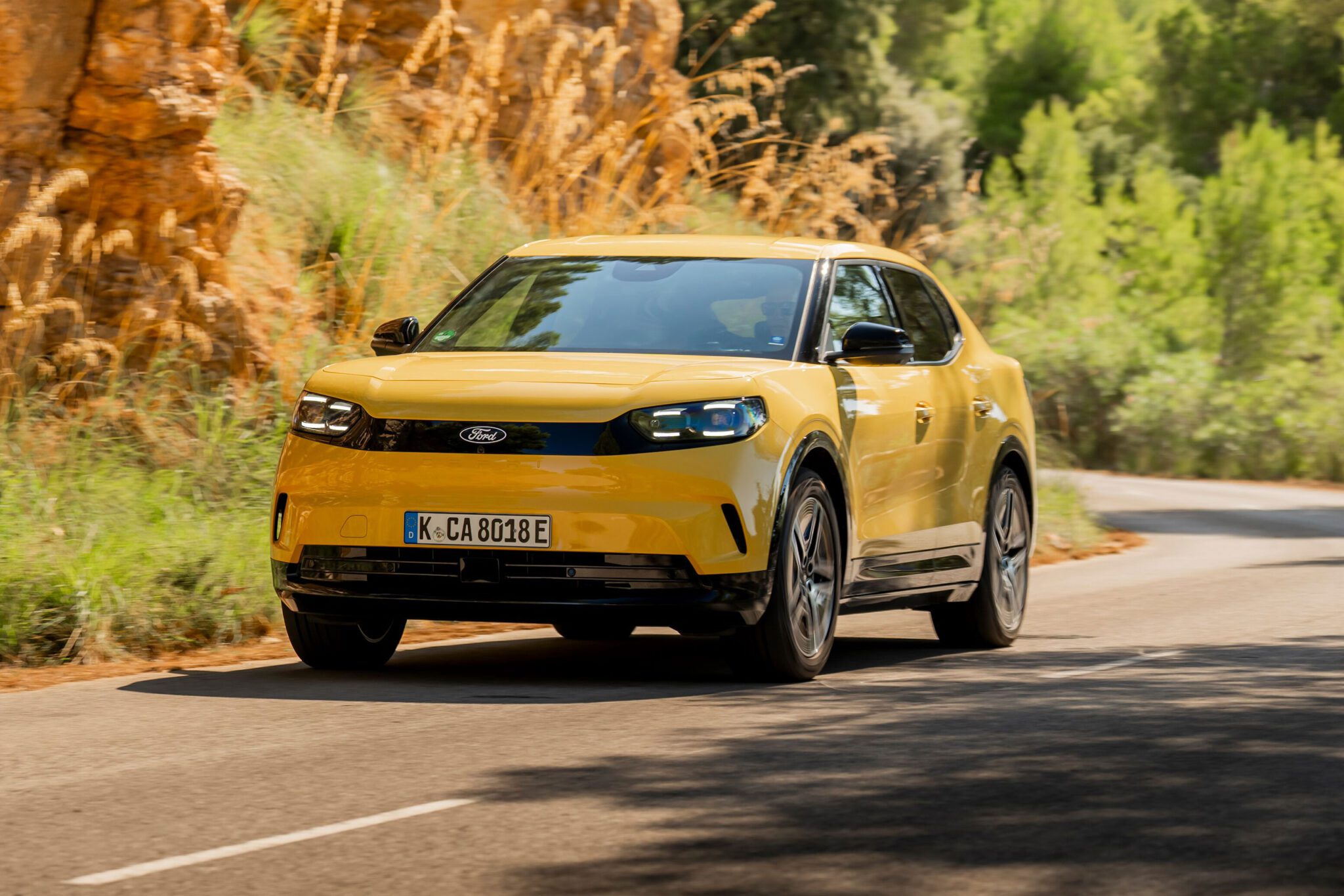
The Ford electric upgrade arrives with enhanced Explorer and Capri models. Consequently, European customers can now order these improved electric SUVs. Furthermore, both vehicles transition to the advanced MEB+ platform. Therefore, buyers receive better range and performance immediately.
Specifically, the entry-level Explorer starts at €39,990. Meanwhile, the Capri SUV coupé begins at €42,400 in Germany. Importantly, UK pricing for the Capri starts at £37,485. Therefore, both models remain competitively positioned. Additionally, the Ford electric upgrade delivers tangible benefits across the lineup.
Both models now feature a new lithium iron phosphate battery. Consequently, this LFP battery eliminates nickel, manganese, and cobalt. Moreover, LFP cells offer improved cost efficiency and durability. Specifically, Western manufacturers previously avoided this technology. However, recent advancements from Asia changed this perspective. Therefore, Ford and Volkswagen now leverage LFP benefits. Additionally, Cell-to-Pack concepts enable competitive energy densities.
The new APP350 electric motor drives these improvements. Specifically, this Volkswagen Group unit replaces the older APP310. Consequently, efficiency increases significantly despite similar permanent-magnet design. In the Capri, power rises from 125 kW to 140 kW. Moreover, maximum torque increases from 310 Nm to 350 Nm. Therefore, acceleration improves from 8.7 seconds to 8.0 seconds. Additionally, the Ford electric upgrade enhances driving dynamics noticeably.
Standard Range models pair the new motor with an upgraded battery. Specifically, net energy content grows from 52 kWh to 58 kWh. Consequently, WLTP range expectations increase substantially. The Capri now achieves 446 kilometres versus 381 kilometres previously. Meanwhile, the Explorer reaches 444 kilometres compared to 378 kilometres. Therefore, range anxiety diminishes for daily commuters. Moreover, the Capri’s aerodynamic body contributes to slightly better figures.
Charging characteristics also evolve with this update. Specifically, DC charging power adjusts from 145 kW to 110 kW. Consequently, the 10 to 80 percent charging time extends slightly. However, the larger battery capacity offsets this minor trade-off. Therefore, real-world usability remains strong. Additionally, the Ford electric upgrade prioritizes balanced performance metrics.
Ford introduces several user-focused enhancements alongside drivetrain improvements. Specifically, one-pedal driving now comes standard on the Capri. Moreover, the Pro Power Onboard system enables external device charging. Consequently, users can power tools or camping equipment with 2.3 kW output. Therefore, versatility increases for active lifestyles. Additionally, these features strengthen the Ford electric upgrade value proposition.
Software and safety systems receive meaningful updates too. Specifically, adaptive cruise control now recognizes traffic signals. Moreover, a new reversing assistant simplifies tight maneuvers. Additionally, the Driver Status Assistant monitors attention and inputs. Consequently, overall safety and convenience improve significantly. Therefore, daily driving becomes more intuitive and secure.
The infotainment system undergoes a comprehensive redesign. Specifically, SYNC Move now allows custom app grouping. Moreover, navigation displays expand for better at-a-glance operation. Additionally, camera portals and parking sensor visuals grow larger. Consequently, drivers access critical information more efficiently. Therefore, the user experience feels modern and responsive.
Ford also introduces the Capri Collection trim level. Specifically, this edition celebrates motorsport heritage with electric performance. Moreover, exclusive Tribute Blue paint distinguishes this variant. Additionally, Satin Black 21-inch wheels complement deeper side skirts. Consequently, the Collection model offers distinctive visual appeal. Therefore, enthusiasts receive a unique expression of the Capri legacy.
Christian Weingaertner leads Ford Europe’s passenger vehicle strategy. Specifically, he emphasizes customer demand for versatile electric family vehicles. Moreover, he highlights the Capri’s standout design and capability. Consequently, the Collection trim aligns heritage with future technology. Therefore, Ford positions these models for broad market appeal.
These technical updates extend beyond Ford’s lineup. Specifically, the Cupra Born and ID.3 Neo share this foundation. Consequently, Volkswagen Group benefits from shared MEB+ advancements. Moreover, industry-wide progress accelerates through collaborative development. Therefore, consumers gain from pooled engineering resources. Additionally, the Ford electric upgrade reflects broader automotive evolution.
The Ford electric upgrade demonstrates strategic platform optimization. Consequently, Ford leverages Volkswagen partnership effectively. Moreover, LFP battery adoption signals supply chain diversification. Additionally, performance gains validate continuous improvement cycles. Therefore, electric vehicle competitiveness strengthens across segments. Ultimately, buyers receive more capable, efficient, and appealing options.