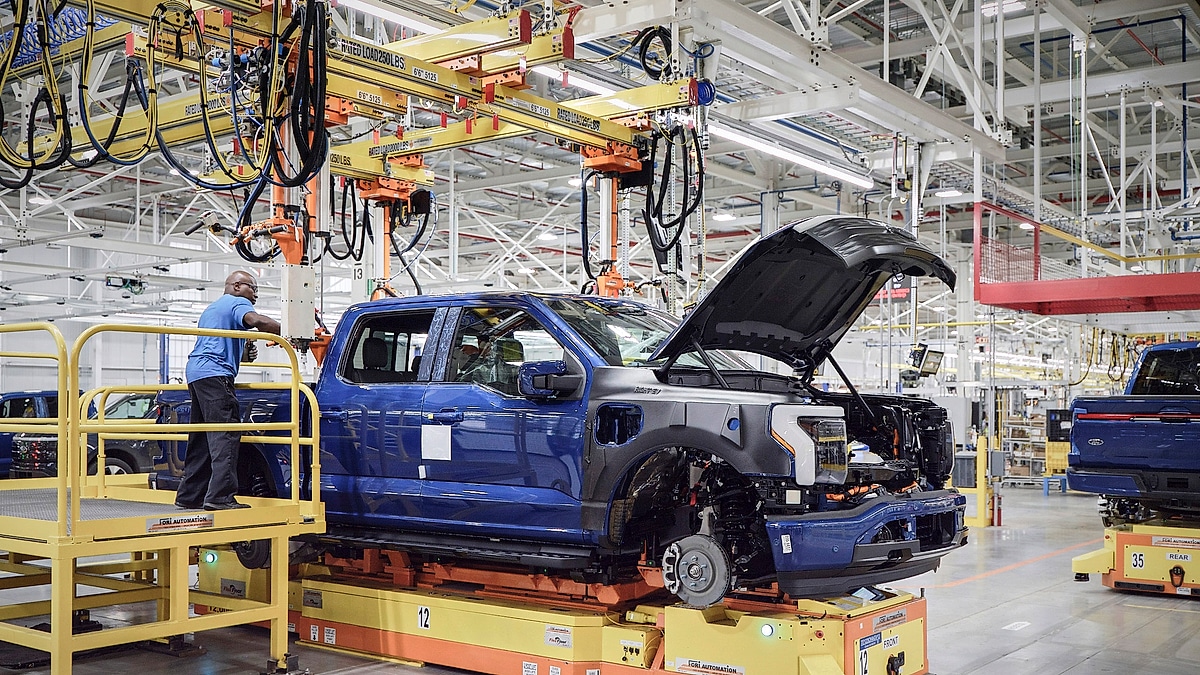
Ford F-150 Lightning 12V battery failure is exposing a critical weakness in modern electric vehicles, where a small component can bring an advanced machine to a complete halt. A recent real-world incident involving a stranded owner highlights how ignoring a simple warning can escalate into total vehicle immobilization, even when the main battery remains fully charged.
The situation unfolded when an owner left a 12V battery warning unresolved for several days. Eventually, the truck stopped working entirely, leaving the driver stuck in traffic for nearly an hour. While the experience may sound like an isolated case, it reflects a broader and growing issue across the EV ecosystem. The real problem goes beyond a dead battery. It lies in how a single point of failure can disable an otherwise fully functional electric vehicle.
Modern electric vehicles rely on two battery systems. The high-voltage battery powers the drivetrain and delivers performance. Meanwhile, a traditional 12V battery handles auxiliary systems such as infotainment, lighting, electronic locks, and critical startup processes. This secondary battery also powers the contactors that connect the main battery to the rest of the vehicle. Without it, the entire system remains inactive.
This design creates a fragile dependency. When the 12V battery fails, the vehicle cannot engage the primary battery, regardless of how much charge it holds. As a result, the vehicle becomes completely unresponsive. The Ford F-150 Lightning 12V battery failure scenario illustrates how a relatively inexpensive component can override the capabilities of a multi-thousand-dollar electric truck.
In conventional gasoline vehicles, a failed 12V battery often allows for manual intervention. Drivers can still unlock doors, access the hood, and jump-start the car. However, many modern EVs remove these fallback options. Electronic door latches and front trunk access often depend on the same 12V system. If that system fails, owners may find themselves locked out of their own vehicle with no immediate way to recover.
This vulnerability creates a cascading problem. Owners may store emergency jump starters inside the vehicle, yet they cannot access them if the battery dies completely. This circular dependency reveals a significant design oversight that manufacturers must address.
The Ford F-150 Lightning 12V battery failure also highlights how user behavior interacts with system limitations. In the reported case, the owner received multiple warnings but chose to delay action. While personal responsibility plays a role, the design should account for human tendencies. Critical warnings must be clear, urgent, and difficult to ignore. Generic alerts such as “battery saver mode” often fail to communicate the severity of the issue.
Beyond warnings, usage patterns contribute to the problem. Features like sentry mode, dashcams, and remote connectivity continuously draw power from the 12V battery. These systems remain active even when the vehicle is parked. Over time, this constant drain reduces battery lifespan, especially if the vehicle does not operate long enough to recharge the auxiliary system fully.
In many cases, owners report 12V battery failures within two years, far below the expected lifespan of three to five years. This shortened lifespan suggests that current designs do not adequately support modern energy demands. The growing reliance on always-on features creates a mismatch between system load and battery capacity.
The response from the EV community further reinforces the issue. Many owners now carry portable jump starters as standard equipment. This shift indicates that the problem is not rare or isolated. Instead, it reflects a systemic concern that users have adapted to rather than resolved. When customers feel the need to carry emergency tools for a critical system, it signals a lack of confidence in the underlying design.
From an engineering perspective, the reliance on a single 12V battery as a critical node introduces unnecessary risk. A more resilient system could include redundancy, improved battery chemistry, or direct integration with the main battery pack. Automakers could also redesign access mechanisms to ensure manual overrides remain available in failure scenarios.
The Ford F-150 Lightning 12V battery failure underscores a broader challenge facing the EV industry. As vehicles become more complex, small components carry greater responsibility. Designers must anticipate how these systems interact under real-world conditions, not just ideal scenarios. Reliability must extend beyond the primary battery and drivetrain to include every supporting system.
Manufacturers also need to improve communication with users. Clear, actionable alerts can prevent many of these incidents. Instead of vague warnings, vehicles should provide direct instructions such as replacing the battery immediately. This approach reduces ambiguity and encourages timely action.
Cost considerations may have influenced the current design approach. A traditional lead-acid battery remains inexpensive and widely available. However, the trade-off between cost and reliability becomes more significant in high-value electric vehicles. Customers expect consistent performance and minimal disruption, especially when investing in advanced technology.
The industry now faces a critical decision. It can continue relying on legacy systems, or it can redesign auxiliary power architectures to match the demands of modern EVs. The latter approach requires investment but offers long-term benefits in reliability, customer satisfaction, and brand trust.
Ultimately, the Ford F-150 Lightning 12V battery failure is not just a technical issue. It represents a gap between innovation and execution. Electric vehicles promise efficiency, performance, and sustainability, but these advantages must extend to every component. A single weak link can undermine the entire experience.
As EV adoption continues to grow, manufacturers must address these vulnerabilities. Stronger system design, better user communication, and improved redundancy can prevent similar incidents. Until then, drivers may continue to face situations where a small battery determines the fate of an otherwise powerful machine.