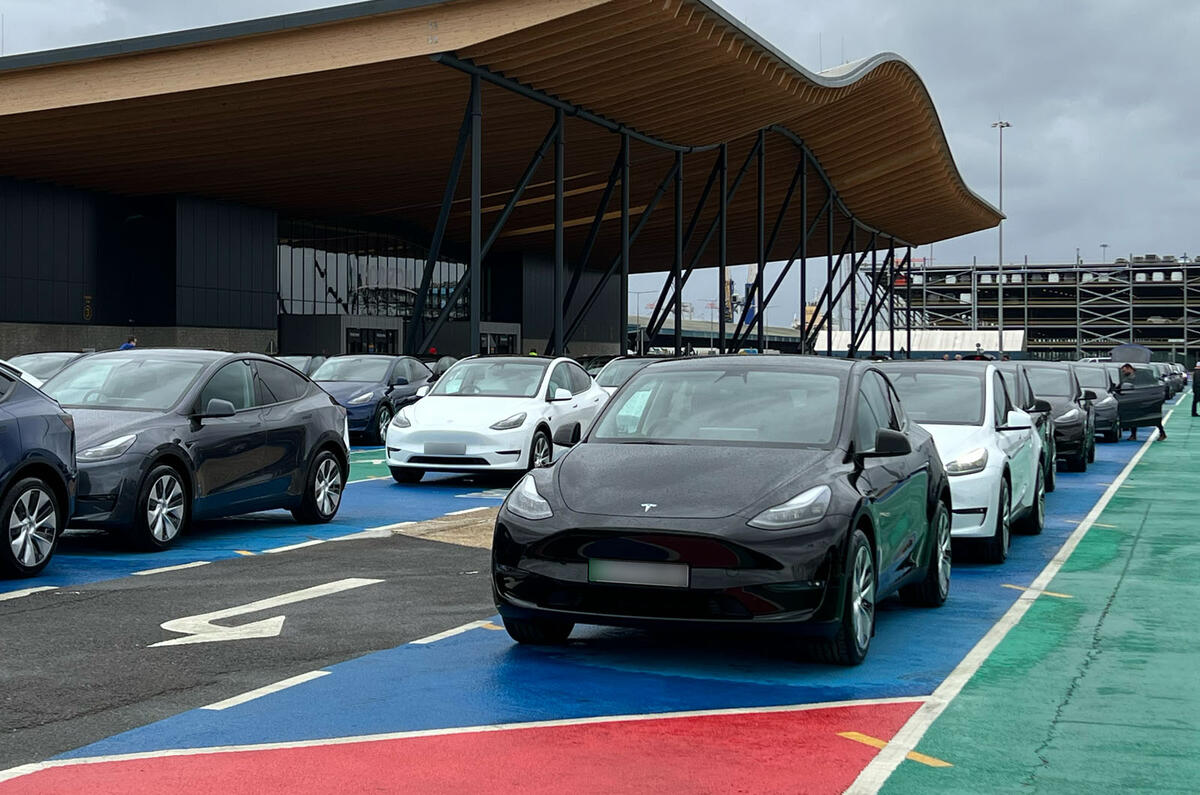
Tesla UK EV sales are heading toward a strong first-quarter lead, even as the company faces declining demand and rising competition across Europe. New registration data shows Tesla pulling ahead of rivals in March, reversing earlier trends where Ford dominated the segment.
Between March 1 and 17, Tesla registered 3,576 vehicles in the UK. Combined with earlier figures from January and February, its preliminary first-quarter total reached 8,877 units. This performance places Tesla well ahead of Ford, which recorded 6,858 battery electric vehicle registrations over the same period .
The shift highlights Tesla’s ability to regain momentum despite a challenging start to the year. In January, the company registered only 718 vehicles, marking a sharp 50.8 percent drop compared to the same month last year. February showed improvement, with registrations rising to 3,140 units. However, that figure still trailed year-on-year performance by over 40 percent.
Despite these declines, March activity has pushed Tesla UK EV sales into a leading position. The surge reflects a typical pattern in Tesla’s operations, where deliveries cluster toward the end of each quarter. Shipment timing from production hubs in Berlin and Shanghai often drives these fluctuations.
Ford initially led the electric segment earlier in the year. It recorded 4,692 battery electric vehicle registrations in January and February. However, its slower pace in March allowed Tesla to close the gap and move ahead. The difference now stands at more than 2,000 units in Tesla’s favor.
Tesla’s broader performance still raises concerns. The company registered 45,513 vehicles in the UK during 2025, marking a 9.6 percent decline from the previous year. This trend suggests weakening demand across Europe, where competition continues to intensify.
At the same time, the UK electric vehicle market is expanding rapidly. In February, battery electric vehicles accounted for 24.2 percent of all new car sales. This means nearly one in four vehicles sold was fully electric. The share increased by 2.8 percent compared to the previous year, signaling steady growth in adoption.
Plug-in hybrid vehicles recorded the fastest growth. Their market share rose to 11.6 percent after a 43.5 percent increase year on year. These trends show that while demand for electric vehicles is rising, buyers now have more options than before.
This growing competition puts pressure on Tesla UK EV sales. New entrants and established automakers continue to expand their electric offerings, giving consumers a wider range of choices across different price points.
Tesla still benefits from a strong product lineup. The Model Y and Model 3 remain central to its UK strategy. The Model Y ranked as the best-selling electric vehicle in the country last year, while the Model 3 secured second place. These models continue to attract buyers due to their range, performance, and brand recognition.
Recent pricing adjustments have also helped maintain interest. The entry-level Model 3 now starts at £37,990, making it more accessible to a broader audience. The Model Y lineup offers several variants, with prices ranging from £41,990 for the rear-wheel-drive version to £61,990 for the performance model.
Flexible financing options further support sales. Customers can lease the Model Y from £299 per month under a business contract. Tesla has also introduced incentives such as 0 percent APR financing and one year of free supercharging on selected units. These offers aim to boost demand during a competitive period.
However, policy changes in the UK could influence future sales. The government plans to introduce a pay-per-mile road charge for electric vehicles starting in April 2028. This measure aims to create a fair system as more drivers switch to electric cars. It follows the introduction of Vehicle Excise Duty for EVs in April 2025, which adds additional costs for owners.
These changes may affect consumer decisions in the long term. While electric vehicles currently benefit from lower running costs, new charges could narrow the gap between EVs and traditional petrol or diesel vehicles.
Tesla has also adjusted its product strategy. The company discontinued right-hand-drive production of the Model S and Model X in the UK. It removed both models from its British website as it prepares for updated versions. This move allows Tesla to focus on higher-volume models and new technologies, including its humanoid robotics program.
Even with these challenges, Tesla UK EV sales continue to demonstrate resilience. The company’s ability to recover in March shows how quickly market dynamics can shift. Strong quarterly finishes remain a key part of Tesla’s sales strategy.
Looking ahead, the UK market will remain highly competitive. Government targets aim to phase out petrol and diesel vehicle sales by 2030, pushing more consumers toward electric options. As adoption grows, automakers will compete more aggressively on price, features, and availability.
Tesla’s current lead highlights its strong position, but maintaining that advantage will require consistent performance. Demand trends, policy changes, and competition will all shape the next phase of growth.
For now, Tesla holds the edge in the first quarter. However, the broader picture suggests a market in transition, where leadership can change quickly as new players and policies reshape the electric vehicle landscape.