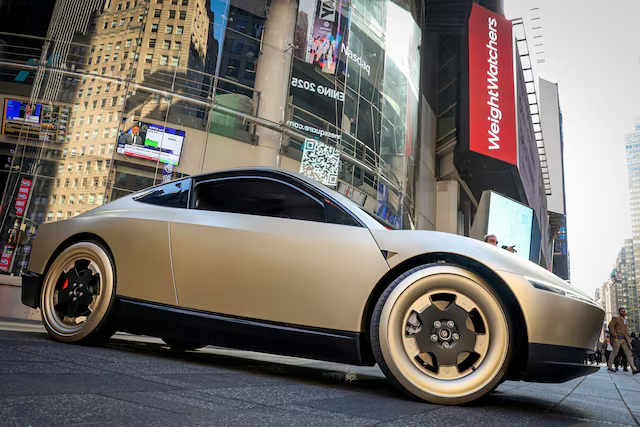
The Tesla Blade Runner 2049 lawsuit has cleared a major legal hurdle. A federal judge ruled the case can move forward. U.S. District Judge George Wu found that Alcon Entertainment presented a “seemingly valid and plausible theory” of copyright infringement against Tesla and CEO Elon Musk. The dispute centers on AI-generated visuals used to promote Tesla’s Cybercab.
Alcon filed the lawsuit in late 2024. It claims Tesla and Musk used AI-generated images that closely mimicked a scene from Blade Runner 2049 during the October 2024 Cybercab unveiling. Warner Bros Discovery had asked Alcon for permission to use film imagery for the event. Alcon denied the request. Despite this, Tesla still used AI-replicated visuals in its promotion. Alcon says these materials falsely suggested its endorsement and violated its copyright.
On February 4, 2026, Judge Wu declined to dismiss Alcon’s main copyright claims. He said the copying allegations were “sufficiently plausible” to continue the case. He also noted it is too early to decide if Tesla’s use qualifies as “fair use” under copyright law. Fair use often applies to non-commercial or transformative works. But Tesla used the images for a commercial product launch, which weakens that defense.
This is the second time Judge Wu has allowed Alcon’s copyright claims to proceed. Last year, he dismissed the studio’s trademark claims against Tesla, Musk, and Warner Bros. However, he kept the copyright claims alive. His latest ruling reinforces that stance. It shows the court takes AI-driven copyright issues seriously.
At the core of the Tesla Blade Runner 2049 lawsuit is a question about AI and creative rights. Alcon argues Tesla’s AI image was not just inspired by the film—it copied a specific copyrighted still of Ryan Gosling’s character, K. Legal experts say this case could shape how courts treat AI content that mirrors protected works without permission.
For Tesla and Musk, the stakes go beyond money. If the court finds infringement, it could affect how they use AI in future marketing. Companies may need to verify that AI outputs do not replicate protected material. The outcome might change industry standards for AI training and image generation.
Warner Bros Discovery remains part of the case, though its role has narrowed. The court already dismissed trademark claims against it. Still, Warner’s attempt to secure—and fail to get—permission from Alcon plays a key role in the studio’s argument. Alcon claims the defendants knowingly ignored its refusal.
As the Tesla Blade Runner 2049 lawsuit advances, both sides will likely enter discovery. This phase could include technical reviews of Tesla’s AI tools and internal emails about the Cybercab launch. Alcon says it prefers a settlement but insists the legal issues must be resolved if talks fail.
This case highlights a growing conflict in the digital era. AI makes it easy to recreate distinctive creative works. But copyright law still protects original expression. For investors and financial professionals, this lawsuit represents a real legal risk for Tesla. It could affect the company’s brand and how it markets new products.
READ: Genesis Ditches Direct Sales in Europe for Dealerships