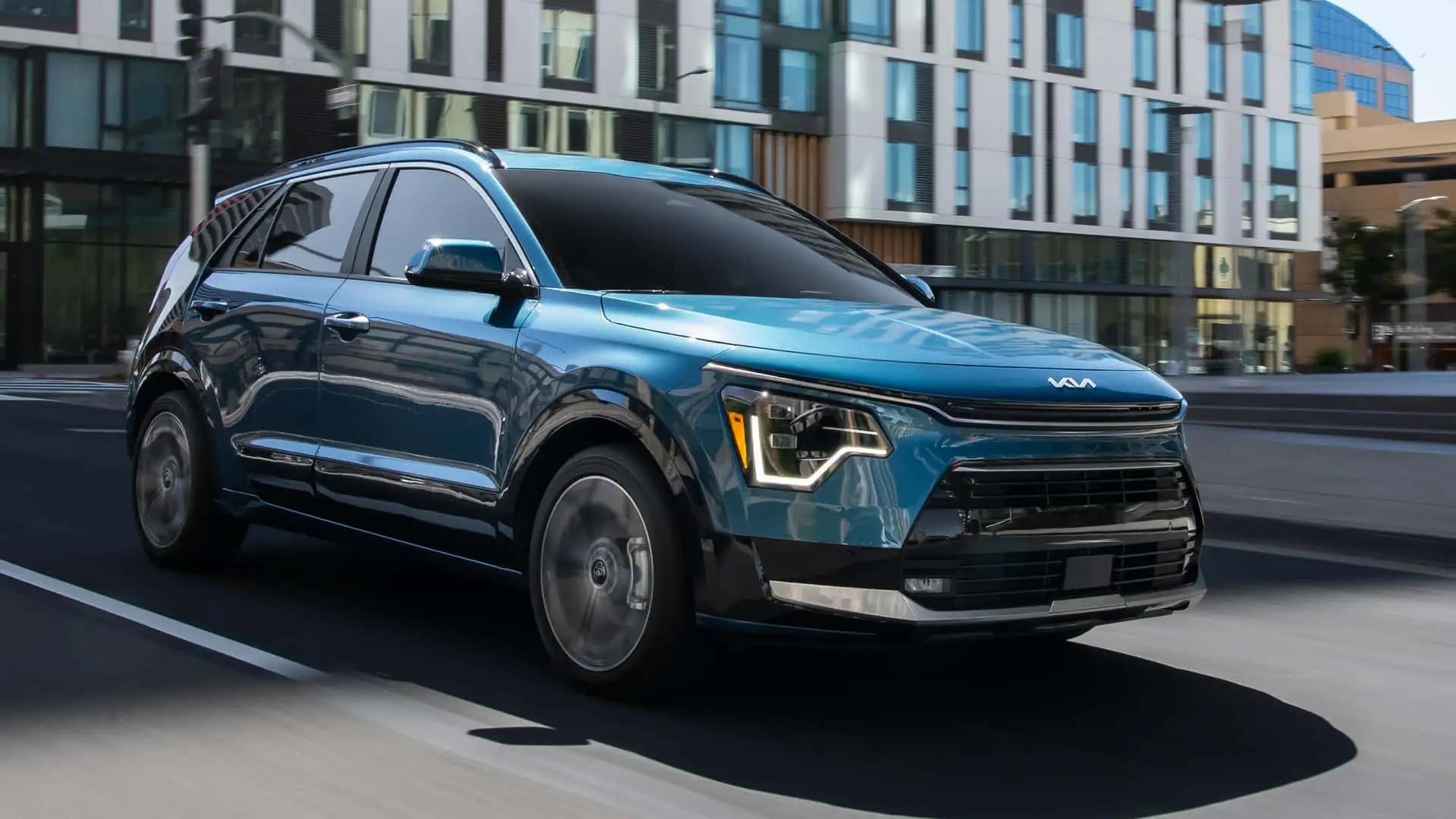
The Kia Niro plug-in hybrid (PHEV) will not be available in the United States for the 2026 model year, Kia confirmed to Kelly Blue Book. Despite offering three powertrain options—hybrid, plug-in hybrid, and pure electric—the Niro struggled to attract significant sales in the U.S. In 2025, Kia sold just 31,182 Niro units in total, a number that did not meet expectations for the plug-in hybrid version.
“Due to changing market conditions, the 2026 Niro PHEV will no longer be available in the U.S. market,” said a Kia spokesperson in a statement.
Declining Sales Lead to the Hiatus
Although Kia does not provide sales data for each variant, it is likely that the Niro PHEV, priced from $35,935, had the lowest share of sales among the three options. The first-generation Niro plug-in hybrid debuted in 2018, and the second-generation version arrived in 2023 with improvements, such as a larger interior and an increased electric range of 33 miles on a full charge. Despite these updates, the PHEV struggled to gain traction in the competitive U.S. market.
Kia’s Uncertain Future for the Niro PHEV
While the news of the Niro PHEV’s discontinuation in the U.S. is final for the 2026 model year, it remains unclear if the model will ever return. Kia recently gave the Niro a facelift in South Korea, but it’s uncertain whether the redesigned model will be available in the U.S. at any point.
The decision to pause the Niro PHEV’s U.S. production comes shortly after similar news from Kia’s parent company, Hyundai Motor Group. The Hyundai Kona Electric, based on the same platform as the Niro EV, is also taking a hiatus for the 2026 model year, with production resuming for the 2027 model.
Industry-Wide Trend of Discontinued Plug-In Models
The discontinuation of the Niro PHEV is part of a larger trend in the automotive industry. Companies like Stellantis, Ford, and General Motors are also halting the production of certain plug-in models. Jeep’s 4xe models, the Dodge Hornet PHEV, the Ford F-150 Lightning, and the Chevrolet BrightDrop van have all faced similar fates due to slow sales and changing consumer preferences.
Despite these challenges, the electric vehicle market continues to grow, with automakers shifting their focus to more popular EV models.
Read Also
Study Confirms Zero-Emission Cars Are Cleaning California Air
Robotaxi Acceptance Grows: Where Americans See Autonomous Cars