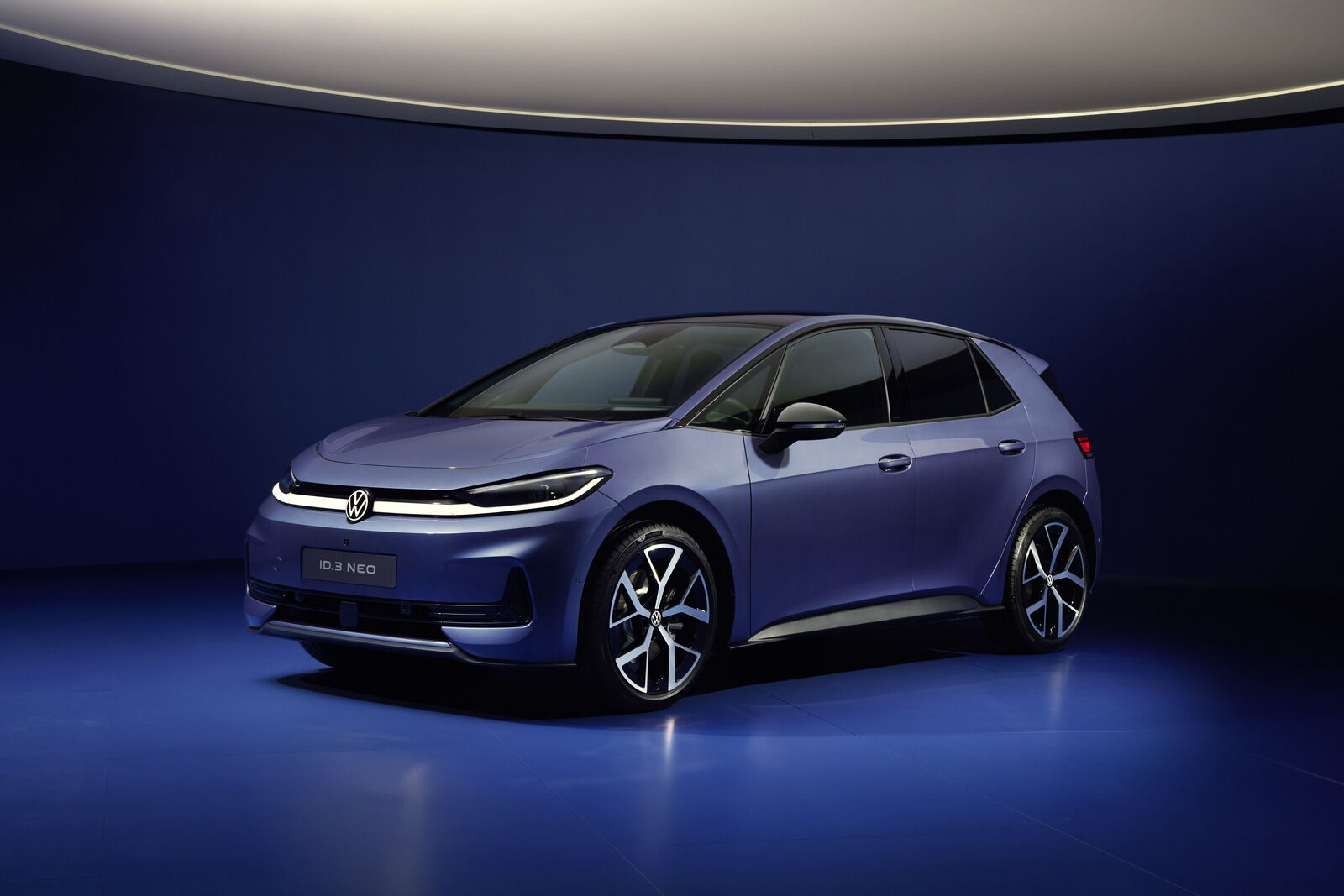
The unveiling of the Volkswagen ID.3 Neo signals a renewed push by Volkswagen to strengthen its position in the electric vehicle market. With improved range, refined styling, and upgraded technology, the new model builds on the foundation of the original ID.3 while addressing key areas of user feedback.
At first glance, the Volkswagen ID.3 Neo introduces a refreshed exterior. Designers have reworked the front and rear bumpers, reshaped the bonnet, and added redesigned headlamp clusters. These elements connect through a continuous LED light bar, giving the car a more modern and cohesive look. In addition, the illuminated Volkswagen logo adds a distinctive visual signature.
Inside, the cabin reflects a clear shift toward comfort and usability. The Volkswagen ID.3 Neo replaces previous touch-sensitive controls with physical buttons for the HVAC system. This change improves ease of use, especially while driving. At the same time, a new multifunction steering wheel offers more intuitive control.
Technology upgrades also play a central role. The car features a 30.5 cm touchscreen infotainment system and a 26 cm digital instrument cluster. Together, these systems deliver a cleaner interface and improved responsiveness. As a result, drivers benefit from a more streamlined digital experience.
The Volkswagen ID.3 Neo also includes a wide range of driver assistance systems as standard. Features such as lane assist, front assist, and turning brake functionality enhance safety in everyday driving. Meanwhile, optional upgrades include connected travel assist, an augmented reality head-up display, and a 360-degree camera system.
Comfort and lifestyle features further expand the car’s appeal. Buyers can choose options such as a panoramic glass sunroof, massaging front seats, and a premium Harman Kardon sound system. In addition, a removable tow bar-mounted bicycle carrier increases practicality for active users.
Performance improvements stand out as a key highlight. The Volkswagen ID.3 Neo uses newly developed electric powertrains that deliver higher torque and improved efficiency. Consequently, the vehicle achieves a driving range of up to 630 kilometers under WLTP testing conditions. This extended range positions it competitively within the electric hatchback segment.
The model lineup offers flexibility for different needs. The entry-level version features a 125 kW motor paired with a 50 kWh battery. Higher trims provide more power and larger battery options, including a 140 kW motor with a 58 kWh battery and a 170 kW motor with a 79 kWh battery. Therefore, buyers can choose a configuration that matches their driving requirements.
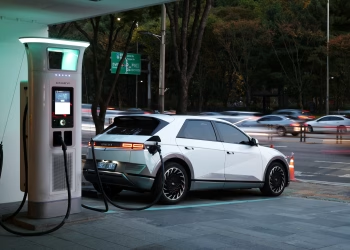
Charging capability also improves across the range. The smaller battery options support DC fast charging at up to 105 kW. Meanwhile, the largest battery can accept up to 183 kW, enabling quicker charging times. As charging infrastructure expands, these capabilities become increasingly important for daily use.
The Volkswagen ID.3 Neo will launch with three trim levels: Trend, Life, and Style. Each offers a different balance of features, performance, and price. This structured approach allows Volkswagen to target a broad range of customers, from entry-level EV buyers to those seeking a more premium experience.
Pre-sales will begin in Germany and other European markets, marking the next phase in Volkswagen’s electric strategy. The company continues to invest heavily in EV development as it transitions away from internal combustion engines.
Ultimately, the Volkswagen ID.3 Neo represents a thoughtful evolution rather than a radical redesign. By refining design, improving usability, and extending range, Volkswagen aims to make electric mobility more practical and appealing. As competition intensifies in the EV market, such incremental but meaningful upgrades may prove essential in winning over a wider audience.