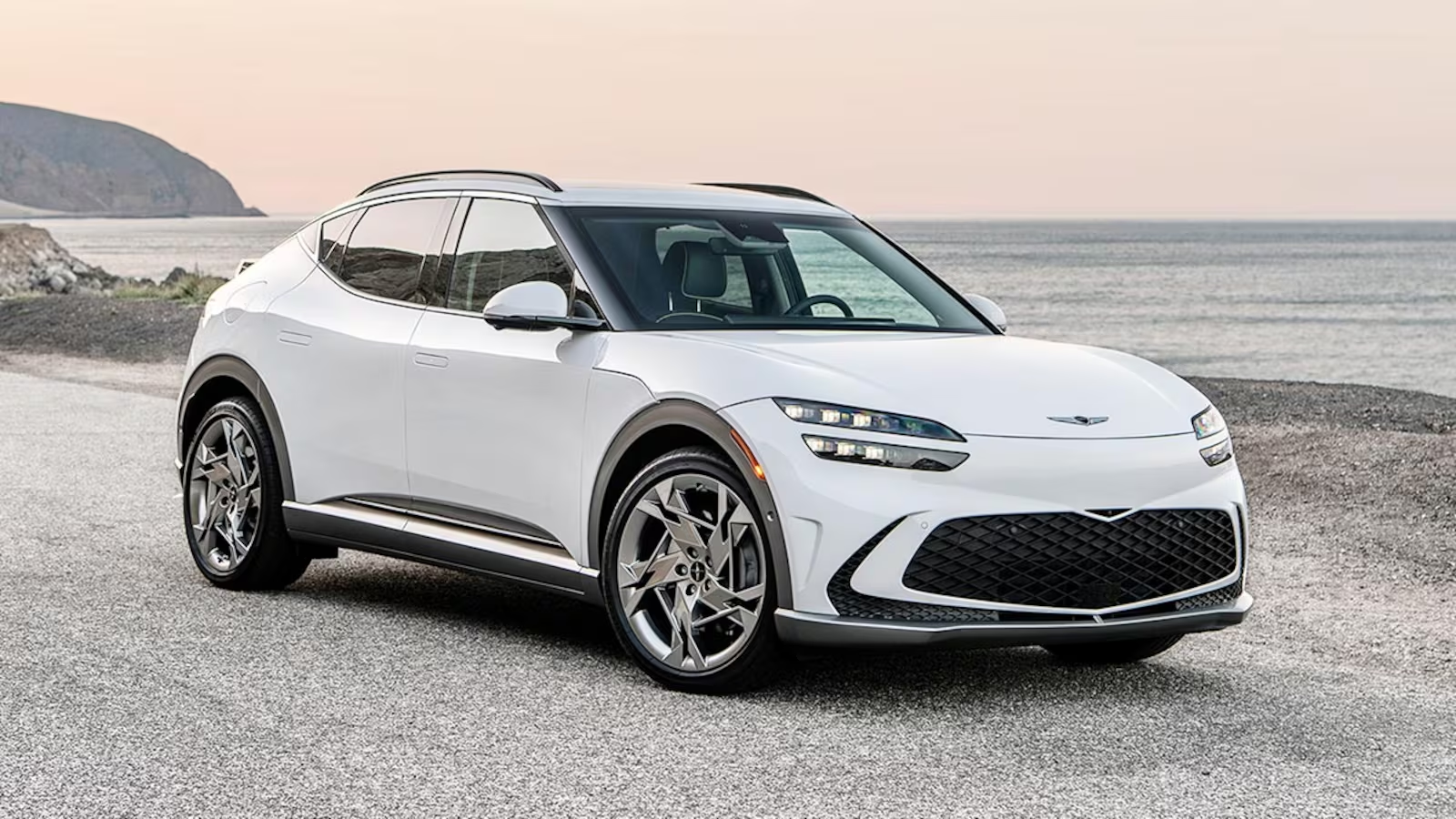
Genesis has abandoned its Genesis direct sales model in Europe. It will now use traditional dealerships instead. This shift supports its goal to grow sales beyond 2,500 vehicles in 2025.
Originally, Genesis used a direct-sales approach like Tesla. It wanted control over pricing and customer experience. However, this limited its reach across Europe. Most buyers still prefer local dealers for test drives and service. As a result, growth remained slow.
Now, the brand is partnering with established dealers. For example, it recently entered Greece, Hungary, and Romania through franchised retailers. This move allows faster expansion without high costs. It avoids building company-owned showrooms.
Dealers also bring existing customers and service networks. Moreover, they understand local markets well. This is crucial as Genesis adds more electric models. In contrast, the old model relied on online orders or sparse urban studios. Many buyers found that inconvenient—especially outside big cities.
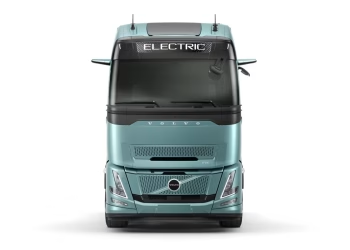
Genesis isn’t alone in this reversal. In fact, Polestar and Volvo have also blended dealers with direct channels. Clearly, pure direct sales struggle in Europe’s complex auto market.
Looking ahead, Genesis will use dealers to support its 2026–2030 plan. This includes new EVs and performance variants. By stepping back from the rigid Genesis direct sales model, it chooses accessibility over exclusivity.
Ultimately, the direct-sales experiment offered control—but not enough sales. Real-world demands have brought Genesis back to dealerships. Only time will tell if this helps it compete with BMW, Mercedes, and Audi in Europe’s luxury segment.
READ: Turkey’s Electric Car Boom: Driven by Economics, Not Ecology