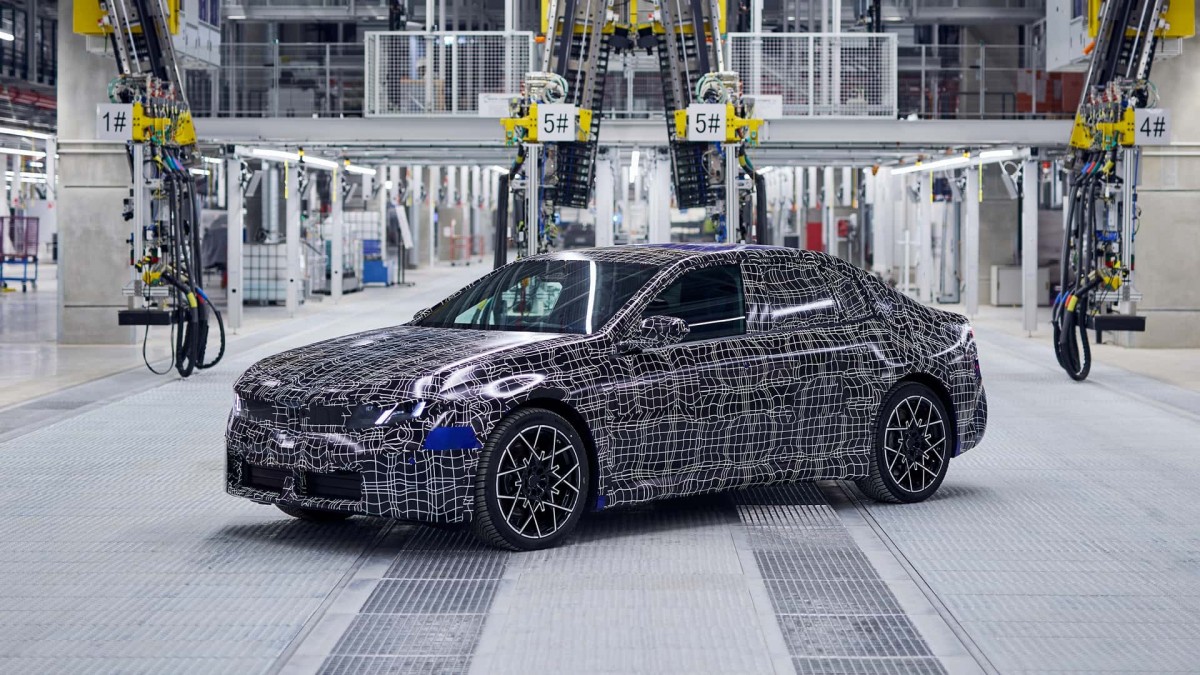
The BMW i3 electric sedan is set to redefine the brand’s future. BMW has finished building its first pre-production test vehicles at the historic Munich factory. These early units aren’t for sale. Instead, engineers and assembly teams are using them to fine-tune the production line before full-scale manufacturing begins in late 2026. This step marks the end of an era—the gas-powered 3 Series has rolled off this line for 50 years—and the start of a new chapter led by the all-electric i3.
The BMW i3 electric sedan belongs to BMW’s “Neue Klasse,” or “New Class,” platform. Unlike earlier EVs that adapted combustion-engine platforms, BMW designed this model from the ground up as an electric vehicle. It features an 800-volt electrical architecture that enables ultra-fast charging. On a compatible high-power charger, drivers can add about 370 kilometers of range in just 10 minutes.
Although wrapped in black-and-white camouflage, the test cars reveal clear design changes. The front overhang looks noticeably shorter than on today’s 3 Series. Electric drivetrains take up less space under the hood, so BMW moved the wheels closer to the corners. This layout gives passengers more legroom and creates a flatter, more open cabin.
Even with a large battery pack under the floor, the i3 keeps a low, sporty stance. Many EVs look tall or bulky because of their batteries, but BMW’s designers worked hard to preserve sleek proportions. Official photos show models with larger wheels and flared wheel arches, suggesting an M Sport trim. This styling reinforces BMW’s focus on dynamic aesthetics—even in a zero-emission car.
Under the skin, the BMW i3 electric sedan introduces next-generation technology. It uses new cylindrical battery cells that store more energy than the prismatic cells in older models. BMW hasn’t released final specs yet, but the company expects the car to exceed 800 kilometers of range on a single charge—putting it ahead of many rivals in the premium EV segment.
BMW plans to offer several versions of the i3. Entry-level models will come with a single rear-mounted motor and rear-wheel drive. Higher trims will add a second motor for all-wheel drive. A performance-focused M version is also in development. Rumors say it might use four individual motors—one for each wheel—and could even play simulated engine sounds through the speakers to heighten driver engagement.
Peter Weber, who leads the Munich plant, called the completion of these first test vehicles a “milestone.” The factory now runs on fully digitized production systems that monitor every step—from welding to final inspection—in real time to ensure top quality.
Full production of the BMW i3 electric sedan starts in the second half of 2026. At that point, it will become BMW’s flagship model, taking over from the 3 Series as the heart of the brand. It will go head-to-head with the Tesla Model 3 and other premium electric sedans. With its dedicated EV architecture, fast charging, long range, and driving dynamics, the i3 represents BMW’s strongest move yet into the electric future.
For longtime fans, the i3 isn’t just another EV—it’s the “Ultimate Driving Machine” reborn for the electric age.