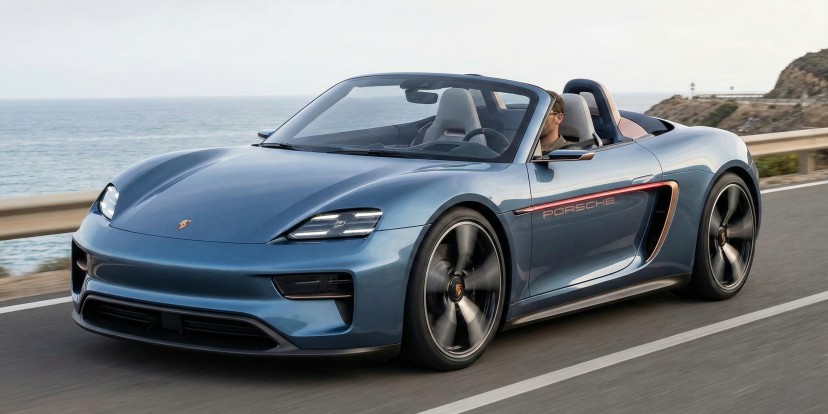
Porsche may cancel its plans for the electric 718 Cayman and Boxster. This would mark a major shift in the brand’s electrification strategy. For years, the company has worked on these models. However, development has faced repeated setbacks. Now, with new CEO Michael Leiters in charge and growing financial pressure, the future of these battery-powered sports cars looks increasingly uncertain.
The project has proven far more difficult and expensive than originally expected. In particular, a major obstacle emerged when Northvolt filed for bankruptcy. The Swedish battery maker was set to supply high-performance cells for the cars. Without that partnership, Porsche lost a critical component. As a result, engineers have had to explore alternatives—adding both time and cost to an already strained timeline.
Moreover, money troubles have only deepened the dilemma. In 2025, Porsche’s profits dropped by €1.8 billion. Much of that loss stemmed from heavy investments in electric vehicles. At the same time, sales in China—a key market—fell by 26 percent. On top of that, new U.S. import tariffs created additional strain. Consequently, these challenges led to Porsche’s removal from Germany’s DAX index, which tracks the country’s top public companies.
Originally, Porsche planned to end production of gas-powered 718 models entirely. It even stopped building them early to make room for the EVs. Yet, in September 2025, the company reversed course. Specifically, it announced that high-performance variants like the Cayman GT4, GT4 RS, and Spyder RS would return—with gasoline engines.
Now, Porsche is considering keeping even more 718 models gas-powered. Additionally, it’s exploring a plug-in hybrid version as a middle ground. That said, hybrids bring their own complications. Fitting both an engine and a battery into the compact 718 platform would require a completely new chassis. Therefore, this path would mean more expense and further delays.
If Porsche does push forward with the electric 718 Cayman and Boxster, it risks launching outdated technology. After all, years of delays mean the infotainment systems, battery chemistry, and charging capabilities might already lag behind competitors. Given how fast EV innovation moves, late entries often struggle to stay relevant.
CEO Michael Leiters now faces a tough choice. He must decide whether to complete a troubled project or redirect resources toward more promising electric models—such as the Macan EV or a rumored all-electric 911 successor. Ultimately, his decision will shape not just the 718 lineup but Porsche’s identity in the electric era.
Many fans worry that adding heavy batteries will ruin what makes the 718 special. After all, its light weight, balance, and sharp handling define the driving experience. Still, canceling the EVs would also signal a retreat from Porsche’s earlier pledge to make most of its sales electric by 2030.
For now, the fate of the electric 718 Cayman and Boxster remains undecided. Porsche is prioritizing financial stability and listening closely to customer demand. Whether the next 718s arrive as EVs, hybrids, or classic gas-powered machines, the decision will define the brand for years to come.