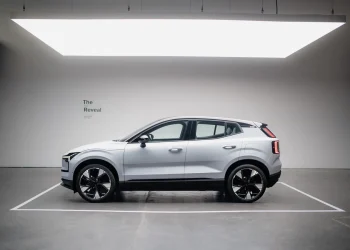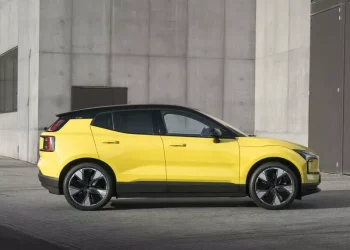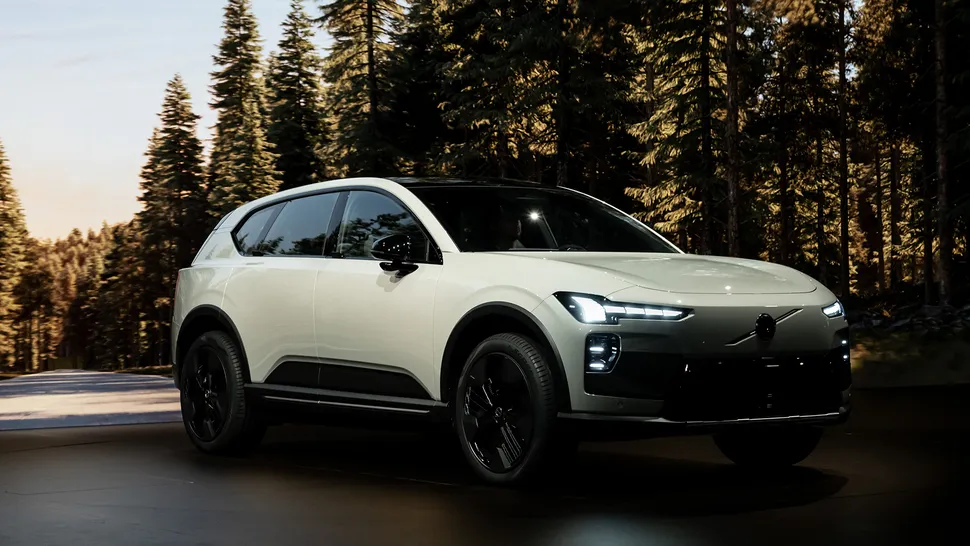
Volvo has unveiled its highly anticipated EX60 electric SUV with bold claims that it has finally cracked the software challenges that have plagued legacy automakers for years. At a high-profile launch event in Stockholm, executives positioned the EX60 not just as another EV, but as a turning point in the company’s digital transformation.
The EX60 arrives at a critical moment for the Swedish automaker. Its predecessor, the combustion-powered XC60, became Volvo’s best-selling vehicle ever, moving more than 2.7 million units globally since 2008. Replacing such a successful model with an all-electric successor is no small task, particularly after the rocky rollout of the flagship EX90, which faced early software and computing setbacks.
Yet Volvo’s leadership appears unusually confident. In fact, the company’s messaging has been unusually direct toward competitors.
A Direct Challenge to Legacy Automakers
During media discussions surrounding the launch, executives made it clear that the EX60 represents what they consider a breakthrough in software-defined vehicles. The comments appeared to take aim at traditional automakers such as Ford and Volkswagen, both of which have publicly struggled with software platform development in recent years.
Volvo leadership suggested that while other manufacturers attempted to transition toward software-first vehicle architectures and encountered roadblocks, Volvo has now successfully implemented its own fully integrated system.
The EX60 is described as the brand’s first truly software-defined SUV, built around centralized computing architecture rather than distributed control units common in older vehicle designs. According to the company, this shift enables faster updates, more responsive infotainment and improved integration of safety and driver assistance systems.
Performance and Charging Ambitions
Beyond software, Volvo is emphasizing the EX60’s headline performance figures. The company claims the new SUV will offer more than 500 miles of range on a single charge, positioning it among the longest-range electric SUVs in its segment.
Fast-charging capability is another major talking point. Volvo states that the EX60 supports charging speeds of up to 400kW, allowing drivers to add approximately 211 miles of range in just ten minutes under optimal conditions. If achieved consistently in real-world use, those figures would place the EX60 ahead of many rivals currently on sale.
Such numbers directly target competitors like Tesla and BMW, both of which have invested heavily in high-performance electric SUVs.
HuginCore and Advanced Computing Power
At the heart of the EX60 is Volvo’s next-generation computing architecture, internally referred to as HuginCore. Named after one of the mythological ravens associated with Norse lore, the system integrates high-performance hardware from Nvidia and Qualcomm.
This centralized processing approach replaces many traditional electronic control units with a more unified computing stack. The result, Volvo claims, is an ultra-responsive infotainment system combined with the processing muscle required for advanced safety features.
The EX60 runs on Android Automotive OS and will be among the first production vehicles to integrate Google Gemini directly into the operating system from launch. This AI assistant is designed to deliver natural conversational interaction, contextual awareness and personalized assistance inside the vehicle.
From Painful Lessons to Digital Confidence
Volvo’s journey to this point has not been smooth. The rollout of the Volvo EX90 encountered delays and software-related complications that temporarily dented confidence in the company’s digital ambitions.
Executives have acknowledged that reaching this stage required time and significant internal restructuring. The company invested heavily in building in-house software capabilities while collaborating with technology partners to stabilize and refine its systems.
The EX60, therefore, represents more than just a new model. It symbolizes Volvo’s attempt to demonstrate that it has moved beyond early software hurdles and can compete in an era where vehicles increasingly function as rolling computers.
Strategic Positioning in a Competitive EV Landscape
The global EV market has become intensely competitive. Chinese manufacturers are advancing rapidly, startups are introducing new platforms and established brands are racing to modernize their product lines.
For Volvo, the EX60 occupies a crucial segment: the compact premium SUV category, one of the most popular vehicle types in Europe and North America. Its success will likely influence the brand’s broader electrification strategy.
By combining long range, ultra-fast charging and advanced AI-driven software integration, Volvo is attempting to differentiate itself not only from traditional rivals but also from technology-centric newcomers.
The company’s assertive tone signals a belief that it has turned a corner in its software development efforts. Whether customers ultimately validate those claims will depend on real-world performance, reliability and the seamless integration of digital features that Volvo now positions as its defining advantage.