BYD is exploring BYD India expansion options to meet surging EV demand. According to Bloomberg, the company may start local assembly using semi-knocked-down (SKD) kits. As a result, this could help it work around strict import limits.
India caps imports of any single model at 2,500 units per year. However, BYD sold about 5,500 units in 2025—an increase of 88% from 2024. Clearly, the quota has become a major constraint.
Therefore, BYD is rethinking its supply strategy. It previously sought to build a full factory in India. But authorities rejected that plan in 2023. Now, the SKD approach offers a more realistic path forward.
Under SKD, vehicles arrive partially assembled. Then, final assembly happens locally. Importantly, this method could cut import tariffs from 70% to just 30%. Consequently, lower costs would improve pricing and margins.
Despite high duties—up to 110% on fully built cars—BYD has gained ground. This is because its prices are lower than Tesla’s. Thus, it has attracted buyers even under tight restrictions.
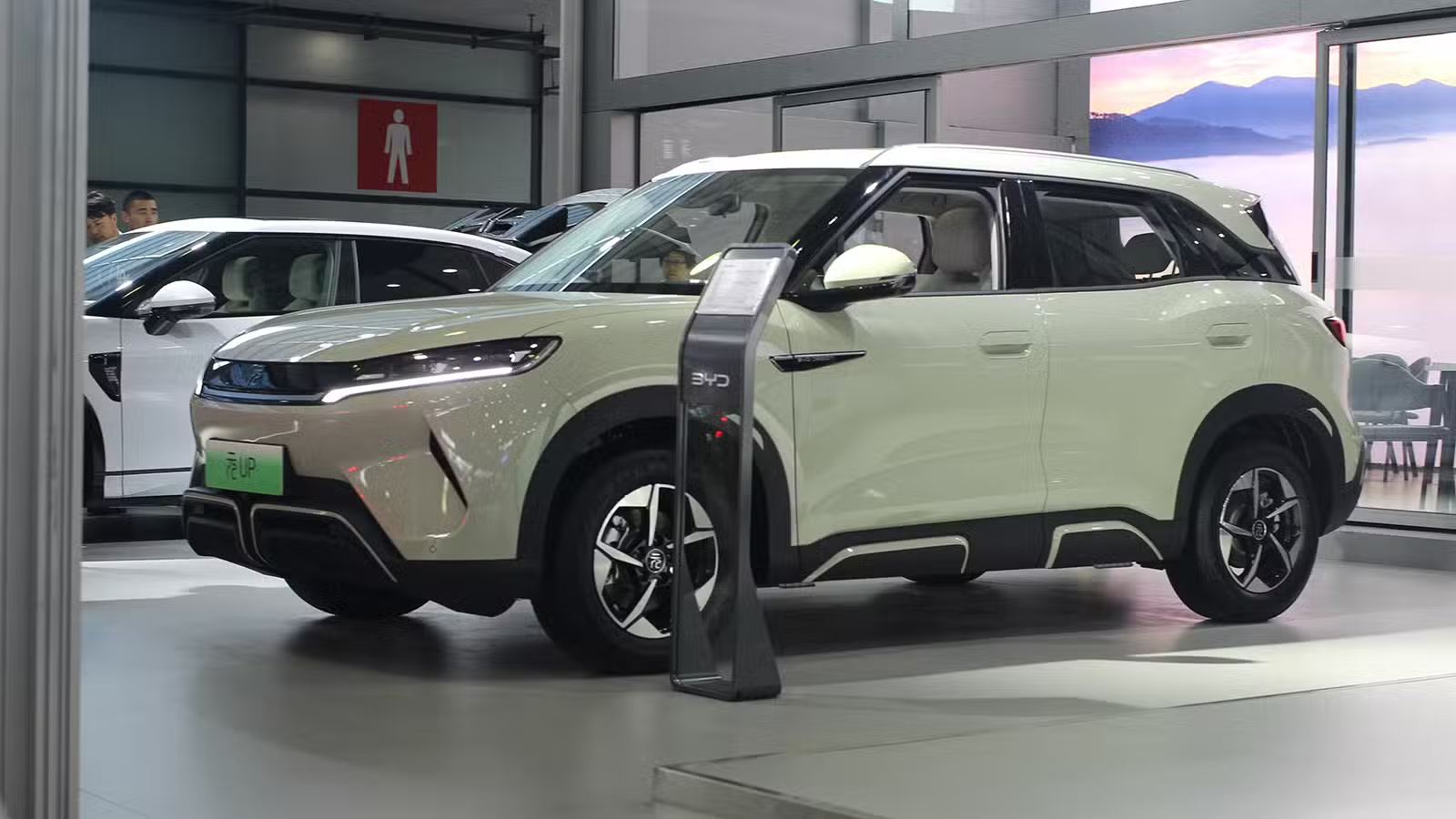
The brand currently sells four models in India: the eMax 7 MPV, Seal sedan, Atto 3 SUV, and Sealion 7. In addition, it plans to launch the Atto 2 in early 2026. This compact SUV will further broaden its lineup.
At the same time, BYD is seeking safety and regulatory approvals for more models. This follows recent visits by senior executives to India. For five years, the company managed operations remotely. Now, it’s taking a hands-on approach.
Notably, in September 2025, BYD delivered its 10,000th vehicle in India. This milestone shows strong early traction. Moreover, dealers reportedly have hundreds of pending bookings.
The timing may also help. In August 2025, Prime Minister Narendra Modi visited China. It was his first trip since the 2020 border clash. As a result, relations appear to be warming slightly.
Still, geopolitical tensions remain. Yet, economic opportunities—like India’s EV push—are opening new doors. Specifically, the government supports electric mobility through incentives and infrastructure.
Globally, BYD aims for 1.3 million overseas sales in 2026. That represents a 24% increase from 2025. In this context, India could become a key growth market.
If approved, BYD India expansion via SKD assembly would ease supply bottlenecks. Furthermore, it would strengthen its foothold in a highly competitive market. Ultimately, success here could serve as a model for other emerging economies too.
In conclusion, affordability, localization, and speed will decide who wins India’s EV race. Therefore, BYD is betting that partial local assembly is the right next step.