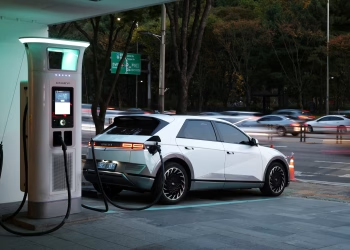
Electric car adoption in Turkey has accelerated at a remarkable pace. In 2016, only 44 battery electric vehicles (BEVs) were sold in a nation of 80 million. By 2025, BEVs accounted for 16.7% of all new car sales—just behind the EU average of 17.4%. As a result, Turkey now ranks as Europe’s fourth-largest EV market, trailing only Germany, the UK, and France.
Berke Astarcıoğlu, a mechatronic engineer from Istanbul, witnessed this shift firsthand. He bought a BMW i3 in 2016 when EVs were rare. By 2023, his Tesla no longer turned heads. “My Tesla has become an ordinary car over here,” he said. Indeed, what was once a premium novelty is now mainstream.
So, what drove this rapid change? Analysts agree it wasn’t environmental idealism. Instead, the surge stems from smart—or at least favorable—tax policy. Turkey’s special consumption tax structure made electric cars only slightly more expensive than comparable petrol models. Even after the government raised EV taxes in August 2025, sales remained strong.
“Practically speaking, Turkish people don’t buy electric vehicles because it’s eco-friendly,” said Ufuk Alparslan of the climate thinktank Ember. “The motivation is purely economical.” In fact, lower running costs and fuel savings make EVs financially attractive in a country with high gasoline prices and volatile currency.
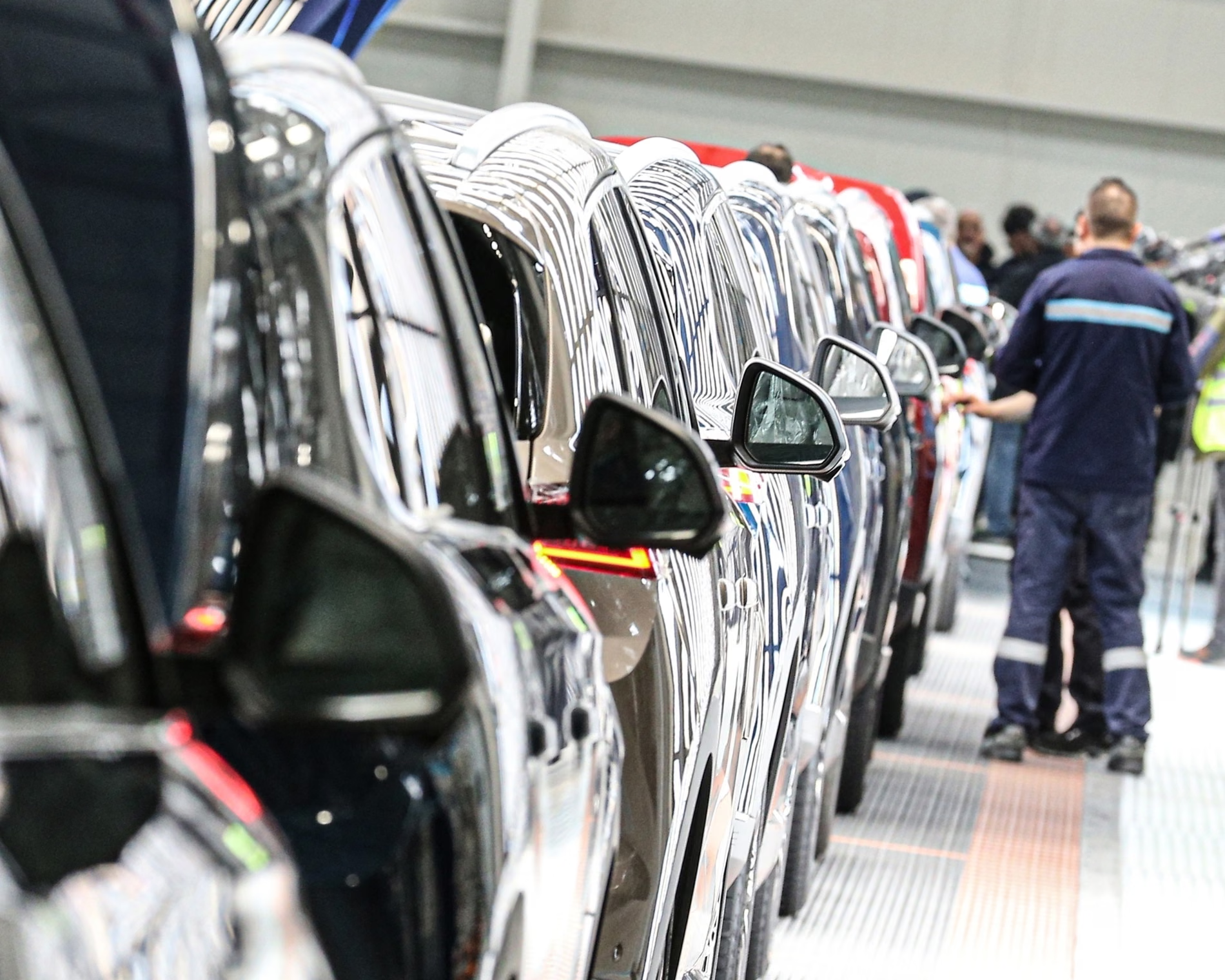
Moreover, the rise of Togg—the domestic EV brand—played a pivotal role. Launched with state support, including zero-interest loans from public banks, Togg overtook Tesla as Turkey’s top-selling EV brand in 2024. According to Berkan Bayram of the Turkish Electric and Hybrid Vehicles Association, “It gained the heart of Turkish buyers.”
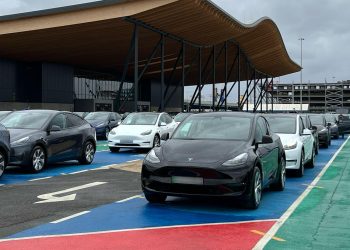
Togg’s success also reshaped the market for foreign automakers. To qualify for the same low-tax bracket, companies like Tesla reduced motor power in their Turkish-spec models. Meanwhile, China’s BYD is pushing aggressively into the market and plans to build a $1 billion factory in Turkey.
Beyond economics, electrification offers strategic benefits. Turkey imports nearly all its oil. According to a report by InstitutDE, a Turkish diplomatic thinktank in Brussels, the national car fleet could quadruple by 2053. Without a shift to electric mobility, oil import dependence—and exposure to price shocks—would soar.
However, experts warn the boom may be fragile. Economist Baki Kaya, co-author of the InstitutDE report, noted that current policies lack long-term vision. “It’s not the result of a strategic decision,” he said. “And I’m personally not that optimistic [it will continue].”
Indeed, while headline prices look competitive, the total tax burden on EVs remains high—ranging from 50% to 86%, depending on the model. Furthermore, inflation and lira depreciation could soon erase affordability gains. “Tax policies that keep electric vehicle prices at more affordable levels could accelerate this momentum,” Alparslan added.
In conclusion, electric car adoption in Turkey reflects a pragmatic consumer response to pricing—not a green revolution. Yet, if supported by stable, forward-looking policies, this trend could significantly cut energy imports and strengthen national resilience. For now, Turkey’s EV surge shows how economic incentives can drive clean tech faster than ideology ever could.
READ: BYD Eyes Local Assembly in India Amid Surging EV Demand