Electric cars are set to surpass diesel vehicles in Britain by the end of the decade as EV adoption accelerates and diesel sales continue to decline.
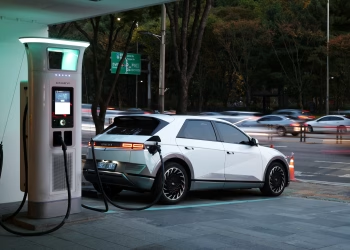
Electric cars are on track to outnumber diesel vehicles on British roads by 2030, marking a historic shift in the country’s transport landscape. New analysis of the UK motor parc suggests that despite electric vehicles currently trailing diesels by millions in absolute numbers, the pace of change means the crossover point is closer than many expect.
The projection comes as diesel registrations continue to fall sharply following the 2015 emissions cheating scandal and as government policy increasingly favours zero-emission transport. Binding electric vehicle sales targets between now and 2035 are accelerating the transition, while diesel cars steadily disappear from showrooms and, eventually, the roads.
According to figures cited in the report, the number of registered diesel cars dropped to 9.9 million by June last year, down 21 percent from a peak of 12.4 million. By contrast, Britain is estimated to have around 1.7 million electric vehicles on the road today.
Why EVs are catching up faster than expected
The analysis by New AutoMotive shows that declining diesel sales combined with sustained EV growth will rapidly narrow the gap. While electric cars still represent a smaller share of the overall fleet, their annual registrations are rising far faster than diesel.
In 2025, UK drivers, fleets and businesses registered 473,348 new electric cars, a 23.9 percent increase on the previous year. Almost one in four new cars sold was fully electric, even though this fell short of the government’s Zero Emission Vehicle mandate targets.
Diesel sales, meanwhile, collapsed to just 103,906 new registrations last year, representing only one in 20 new cars. A decade ago, diesel models accounted for nearly half of all new vehicles sold in Britain.
The projected crossover
New AutoMotive’s modelling suggests that diesel volumes will continue to fall as older vehicles are scrapped and replaced. By 2026, the think tank estimates there will be 8.77 million diesel cars and 2.38 million EVs on UK roads. By 2028, the gap will shrink to around three million vehicles.
The pivotal moment is expected in 2030, when electric cars are forecast to reach nearly seven million registrations, overtaking a reduced diesel fleet of just over five million. From that point on, EVs are projected to become the dominant alternative to petrol in the UK car parc.
Policy, pollution and changing behaviour
Government measures are playing a major role in the shift. The planned ban on new petrol and diesel car sales from 2030, alongside the ZEV mandate, is reshaping manufacturer strategies and consumer choices. Emissions charging zones in major cities are also accelerating diesel’s decline.
London is expected to lead the change. New AutoMotive predicts the capital could become effectively diesel-free by the end of the decade, with fuel stations stopping diesel sales as demand collapses. Similar patterns are expected to follow in other urban areas over the 2030s.
Ben Nelmes, chief executive of New AutoMotive, said the transition is essential for cleaner air and reduced reliance on imported fuel. He argued that the rapid growth of electric cars brings quieter streets, lower running costs and long-term economic benefits.
Not the end for diesel everywhere
While diesel cars are fading fast, the picture is different for commercial vehicles. Diesel vans remain at record levels, with businesses still relying on the fuel for heavier workloads. Rural areas are also expected to retain diesel vehicles for longer, as urban drivers switch first to avoid emissions charges.
Industry figures show petrol still dominates the overall car parc, accounting for more than half of vehicles on UK roads. However, as electric cars continue to grow and diesel fleets age, the balance between fuel types is set to change dramatically within the next five years.
A technology shift, not a culture war
Analysts and industry leaders say the move away from diesel is being driven less by politics and more by economics and technology. Electric cars are becoming cheaper to run, easier to live with and increasingly powered by domestically generated energy.
As the numbers suggest, the diesel era in Britain is not ending because the fuel ran out, but because a better alternative has arrived. By the end of the decade, electric cars are expected to be a more common sight on UK roads than diesel vehicles, signalling one of the most significant changes in motoring history.