
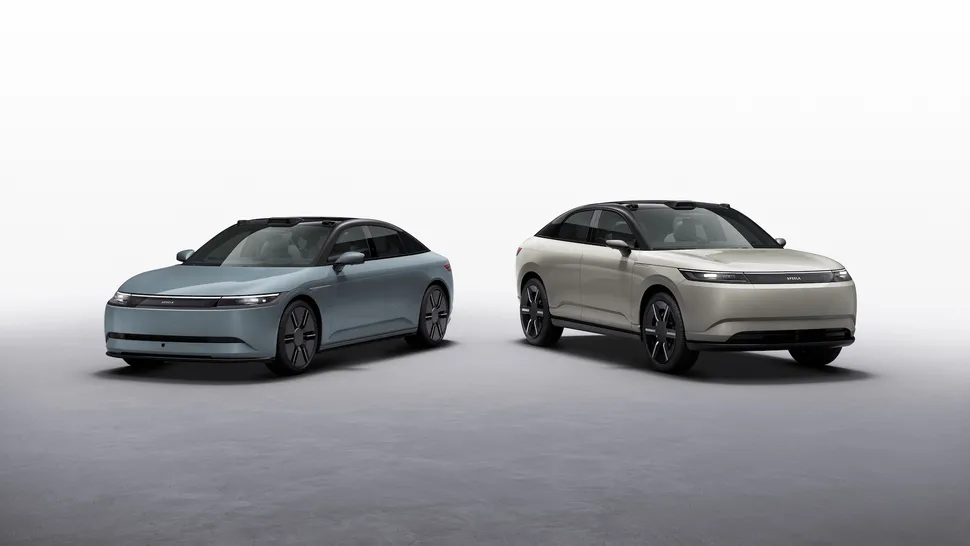
At the 2026 Consumer Electronics Show in Las Vegas, Sony Honda Mobility once again used the global stage to spotlight its ambitious electric vehicle project. While the long-awaited Afeela 1 is finally nearing customer deliveries, the joint venture surprised audiences by previewing a second model: an all-electric SUV designed to expand the brand’s reach.
The teaser suggests a broader product strategy is taking shape. However, as Sony and Honda refine their premium tech-forward vision, fast-moving Chinese automakers continue to scale production and roll out competitively priced electric SUVs at remarkable speed.
A Familiar CES Tradition With a New Twist
For several years, Sony Honda Mobility has treated CES as a recurring showcase for its electric ambitions. The Afeela sedan has become something of a fixture at the event, evolving from early concept to near-production model.
This year’s presentation focused on what the company described as a pre-production version of the Afeela 1. The vehicle closely resembles the $102,900 launch edition that is expected to begin reaching customers later this year in the United States.
Yet even before the first deliveries begin, executives shifted attention toward the future. A larger SUV variant is now in development, with a projected launch window as early as 2028.
Afeela SUV: More Space, Same Digital DNA
Although full technical specifications remain under wraps, Sony Honda Mobility confirmed that the upcoming SUV will share the same core architecture and technology stack as the sedan.
Visually, early images suggest a similar design language: smooth surfaces, minimalistic detailing and a strong emphasis on aerodynamics. The primary difference appears to be a higher ride height and expanded cabin dimensions to improve flexibility and accessibility.
Inside, the SUV is expected to retain the company’s “Personal Agent” system powered by Microsoft’s Azure OpenAI services. This AI-driven interface enables conversational interaction between driver and vehicle, positioning the car less as a machine and more as a digital companion.
The Snapdragon Digital Chassis platform will also carry over, providing computing power for advanced driver assistance systems, infotainment and cloud connectivity.
One headline feature remains the integration of PlayStation 5 gaming capabilities directly within the infotainment system. Sony continues to emphasize in-car entertainment as a differentiator in a crowded EV market.
Advanced Autonomy Remains Central
Like the sedan, the SUV is likely to include an extensive array of sensors designed to support advanced levels of autonomous driving. The Afeela 1 already incorporates multiple cameras, radar units and lidar systems aimed at enabling high-level driver assistance.
Sony Honda Mobility has repeatedly positioned software and AI as the heart of its value proposition. The SUV will likely follow the same blueprint, combining hardware with cloud-based updates and ongoing feature improvements.
This approach reflects a broader shift in the automotive industry, where vehicles are increasingly defined by software capabilities rather than purely mechanical performance.
The Competitive Landscape Is Shifting Quickly
While Sony and Honda focus on premium positioning and gradual rollout, Chinese EV manufacturers are expanding aggressively. Brands such as BYD, Nio and XPeng have already introduced multiple electric SUV models across different price tiers.
These companies benefit from vertically integrated supply chains, domestic battery production and rapid iteration cycles. Many of their vehicles are available at significantly lower price points while offering competitive range and advanced driver assistance features.
In contrast, Sony Honda Mobility is entering the market with a premium strategy. The Afeela 1’s six-figure price tag positions it squarely in luxury territory. The SUV is expected to follow a similar trajectory, though the company has hinted at broader appeal.
Timing and Market Pressure
The planned 2028 launch for the SUV raises questions about market timing. By that point, Chinese automakers and established global brands are expected to have expanded their electric SUV portfolios even further.
At the same time, legacy manufacturers in Europe and North America are accelerating EV production. Companies such as Volvo and Ford are investing heavily in compact and mid-size electric SUVs aimed at mainstream buyers.
Sony Honda Mobility’s challenge will be to differentiate through software sophistication, seamless digital ecosystems and brand appeal. The collaboration blends Sony’s consumer electronics expertise with Honda’s automotive engineering background, a pairing that remains relatively unique.
A Broader Vision of Mobility
The SUV teaser signals that Sony Honda Mobility does not intend to remain a single-model experiment. Instead, the joint venture appears committed to building a portfolio that integrates entertainment, AI and mobility into a cohesive experience.
By expanding into the SUV segment, the company is targeting one of the most popular vehicle categories globally. SUVs continue to dominate sales in many regions, particularly in North America.
Whether the brand can convert technological ambition into sustained market share remains uncertain. What is clear is that the race toward intelligent electric mobility is intensifying, and the competitive gap between established tech-driven newcomers and fast-scaling Chinese manufacturers is narrowing rapidly.


