Tesla EV myths challenged by owner
A Tesla Model 3 driver has gone viral for breaking down three common Tesla EV myths that discourage people from going electric. TikTok user Damien (@steps970) shared his experience, supported by data, to argue that electric vehicles are more practical and reliable than many believe.
Myth 1: EV charging takes forever
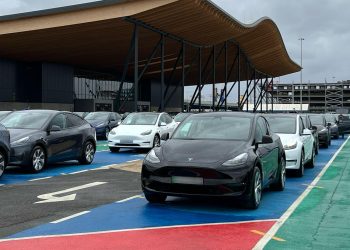
The first misconception is that charging an EV is painfully slow. Damien says this is false, noting that his Tesla Model 3 charges from 10% to 80% in just 25–30 minutes at a Supercharger. With a Level 2 home setup, charging may take 5–6 hours, but since it happens overnight, the car is ready by morning.
While electricity costs vary, Damien points out that home charging is far cheaper than gasoline. On average, powering an EV costs about one-third the price of fueling a gas vehicle. Those who install solar or renewable energy at home can reduce costs even further.
Myth 2: EVs catch fire easily
Another persistent myth is that EVs are more prone to fires. Damien clarifies that while EV fires are harder to extinguish, gas vehicles are statistically more likely to ignite. Research from Kelley Blue Book and reports from The Guardian confirm that gas-powered cars catch fire at higher rates than EVs.
Damien emphasizes that Tesla fires, though rare, receive heavy media coverage, creating the illusion that EVs are unsafe. In reality, data shows EVs are less likely to burn than their gasoline counterparts.
Myth 3: EV batteries don’t last
The third myth involves battery durability and replacement costs. Critics argue that EV batteries fail quickly and cost thousands to replace, sometimes exceeding $10,000. However, Damien explains that real-world data proves otherwise.
Most EV batteries outlast the typical lifespan of a gas-powered car. Studies show they rarely fail, and InsideEVs previously reported that long-term battery degradation is slower than many assume. For example, Tesla battery packs are designed to last well beyond 300,000 miles under normal usage.
Conclusion
By addressing charging, fire risks, and battery longevity, Damien demonstrates that the most common Tesla EV myths don’t hold up to scrutiny. With faster charging options, safer fire statistics, and long-lasting batteries, EVs are proving to be more reliable than many skeptics believe.