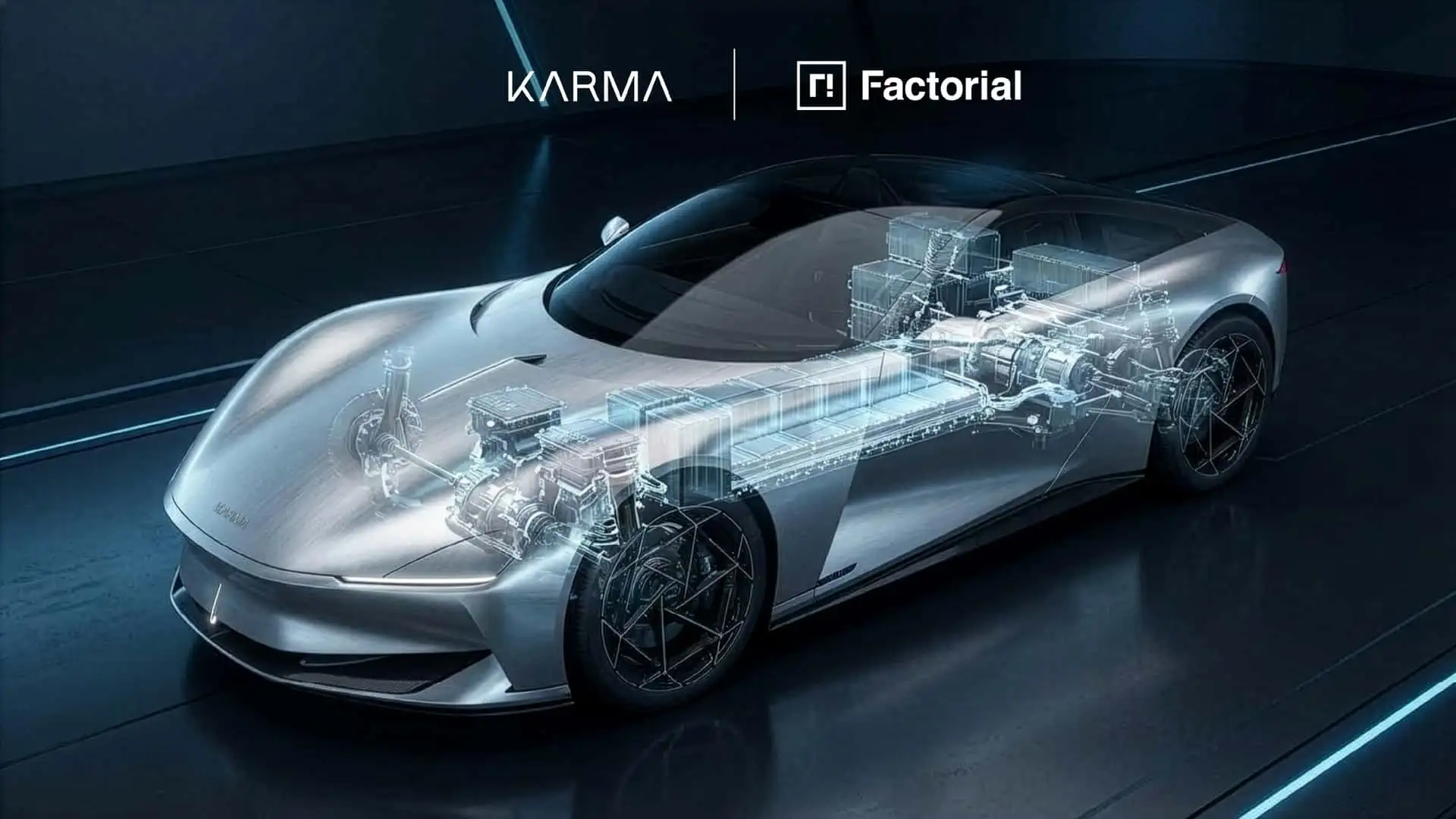
Karma Automotive plans to introduce its first fully electric vehicle, the Kaveya, in 2027. The California-based startup, which emerged from Fisker Automotive’s bankruptcy in 2014, will use semi-solid-state battery cells from Factorial Energy in the Kaveya. This move marks a key step toward advancing solid-state battery technology, which promises to transform electric vehicle powertrains.
Although semi-solid-state batteries are still in early stages, Karma’s decision to integrate them into the Kaveya is a bold move for a smaller player in the EV market.
A New Era for Karma Automotive
Karma’s journey from Fisker Automotive’s bankruptcy to a niche luxury brand has been marked by innovation. The company’s first-generation Niro plug-in hybrid debuted in 2018, followed by the second-generation version in 2023. Karma’s current models include the Gyesera and Amaris, set to launch soon. Despite focusing on high-end, low-volume production, Karma’s vehicles have gained attention for their luxury designs and performance.
CEO Marques McCammon emphasized that Karma’s smaller production scale is ideal for introducing new technologies like semi-solid-state batteries. “We’re a three to five thousand unit per year type of manufacturer, and that’s the perfect place to pilot new technologies,” McCammon told InsideEVs.
Semi-Solid-State Batteries: The Future of EV Powertrains
Karma’s decision to use semi-solid-state batteries from Factorial Energy for the Kaveya represents a significant step in battery development. Solid-state batteries are considered the future of EV technology because they offer higher energy density, lighter weight, and faster charging times compared to traditional lithium-ion batteries.
Factorial Energy’s semi-solid-state batteries, while still in the early stages of deployment, could improve the weight and range of electric vehicles. For example, a 90-kilowatt-hour pack could provide 500 to 600 miles of range while weighing only about 580 pounds. These improvements could make semi-solid-state batteries a game changer for the EV industry.
Kaveya: Performance and Design
The Kaveya will offer impressive performance with more than 1,000 horsepower and a top speed exceeding 200 miles per hour. The vehicle’s design will feature gullwing doors and a yoke steering wheel, reflecting its high-performance sports car styling. The Kaveya will also use a “dog bone” architecture, optimizing the battery layout for efficiency and performance.
Factorial Energy’s semi-solid-state technology will contribute to the Kaveya’s lightweight platform, making it even more efficient. The vehicle is expected to offer more than 250 miles of range on a full charge, positioning it as a strong contender in the luxury electric vehicle market.
Karma’s Position in the EV Market
Karma has deliberately chosen a low-volume production strategy, avoiding the mass-market approach of competitors like Rivian and Lucid. The company has sold about 1,000 cars across North America and Europe since its inception. Last year, it produced just 146 Reveros, with prices well above $150,000. Karma’s niche positioning in the high-end EV market remains intact.
Despite challenges in breaking into the broader EV market, McCammon believes Karma’s exclusive, low-volume approach allows it to innovate and introduce cutting-edge technologies like semi-solid-state batteries. “We want to offer something different and stay at the forefront of battery tech,” he added.
The Future of Solid-State Batteries in EVs
Karma’s focus on semi-solid-state batteries is part of a larger trend. Companies like QuantumScape and Solid Power are working to bring solid-state technology to mass-market vehicles. However, for now, solid-state batteries remain a futuristic development that will take time to perfect.
Karma’s decision to use these innovative batteries in the Kaveya could mark the beginning of a new era for EVs. As semi-solid-state battery technology matures, more manufacturers are likely to follow Karma’s lead, integrating these advanced batteries into their vehicles.
Read Also
Zero-Emission Cars Are Cleaning California’s Air
Robotaxi Acceptance Grows: Where Americans See Autonomous Cars