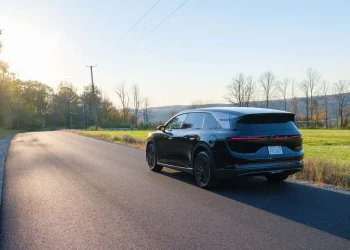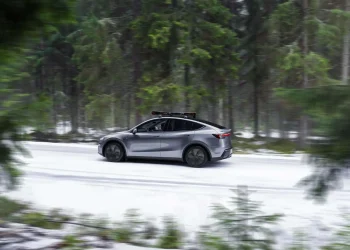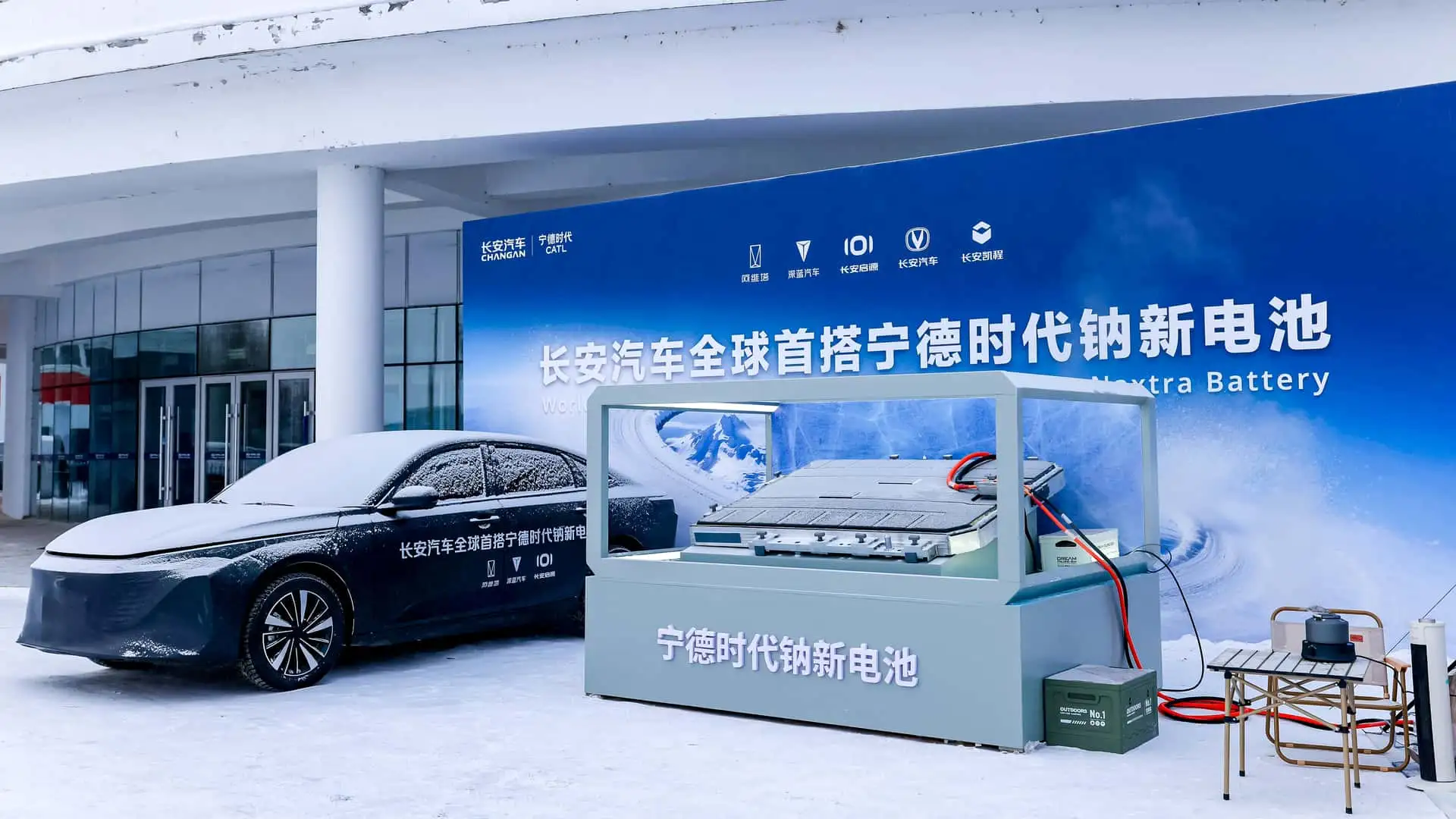
Chinese battery giant CATL and automaker Changan Automobile are preparing to bring the world’s first passenger car powered by sodium-ion batteries to public roads by mid-2026. If successful, this launch could usher in a new era for electric vehicles (EVs) with better temperature resilience and reduced fire risks.
The CATL Naxtra sodium-ion battery will debut in the Changan Nevo A06 sedan, offering an estimated range of approximately 400 kilometers (249 miles) on the China Light-Duty Test Cycle (CLTC). Following the Nevo A06, this battery will be expanded across Changan’s broader portfolio, including vehicles from Avatr, Deepal, Qiyuan, and Uni, according to the company’s statement.
CATL described the launch as a pivotal step in the automotive industry’s shift toward a dual-chemistry ecosystem. This will enable both sodium-ion and lithium-ion batteries to complement one another, addressing diverse consumer needs. The move is particularly significant for the rapidly emerging sodium-ion battery technology, which presents a promising alternative to lithium iron phosphate (LFP) batteries that currently dominate China’s EV market.
The Benefits of Sodium-Ion Batteries
Sodium-ion batteries offer several advantages over their lithium counterparts. They are considerably cheaper and far more abundant, given the widespread availability of sodium. These batteries also pose no risk of thermal runaway, a dangerous phenomenon that can lead to fires in lithium-ion batteries, and are far less sensitive to extreme temperatures.
From an energy density perspective, the Naxtra battery is competitive, delivering 175 watt-hours per kilogram. While this is lower than nickel-rich chemistries, it’s comparable to LFP batteries. This makes the sodium-ion battery particularly well-suited for low-cost, low-range EVs, as well as stationary energy storage applications.
Cold-Weather Performance: A Game Changer
One of the standout features of the Naxtra sodium-ion battery is its superior cold-weather performance. CATL claims the discharge power of the Naxtra battery at -30 degrees Celsius (-22 degrees Fahrenheit) is three times higher than that of LFP batteries. This makes it an ideal candidate for regions experiencing harsh winter conditions, where EVs typically face significant range losses.
Notably, the Naxtra battery reportedly retains more than 90% of its range at temperatures as low as -40 degrees Celsius (-40 degrees Fahrenheit). Power delivery remains stable even at extreme lows of -50 degrees Celsius (-58 degrees Fahrenheit). This could significantly improve the driving experience for those in cold climates, especially in places like the Midwest and Northeast, where EV owners have frequently reported range losses during winter months.
While the Naxtra battery is not expected to make its debut in the U.S., it could prove especially valuable in regions where temperatures often drop below freezing.
Read Also
2026 Kia Niro Plug-in Hybrid to Skip Model Year in U.S.
Karma Automotive to Launch Kaveya EV with Semi-Solid-State Batteries in 2027
Future of Battery Chemistry in EVs
The Naxtra sodium-ion battery is just the beginning. CATL is optimistic about the future potential of this technology. As the sodium-ion supply chain matures, the company expects to see substantial improvements in EV range, with future models reaching 600 kilometers (373 miles). Extended-range EVs (EREVs) and hybrids could also achieve up to 400 kilometers (249 miles), meeting over half of the typical range requirements in China’s rapidly expanding EV market.
This development is a significant step toward a more diversified EV ecosystem. While lithium-ion batteries will continue to play a key role in the market, it’s increasingly clear that the future of electric vehicles will be defined by a mix of battery chemistries, each tailored to different needs and driving conditions. Just as internal combustion engines evolved to offer diverse options, the growing presence of sodium-ion batteries will provide consumers with more choices to suit their driving habits, energy requirements, and environmental factors.
With sodium-ion batteries gaining traction, the next few years could see this technology become a key player in the global shift toward cleaner and more sustainable electric vehicles.