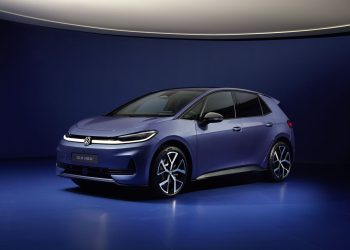
BMW iX3 vs Mercedes GLC EQ Overview
The BMW iX3 vs Mercedes GLC EQ debate defines the next stage of German EV competition. Both crossovers, revealed at the Munich Motor Show, aim to revive Germany’s place in the global electric vehicle race. They arrive at a time when automakers face slower-than-expected EV adoption, tough Chinese competition, and Tesla’s dominance.
BMW and Mercedes built these EVs from the ground up with 800-volt platforms, over-the-air updates, and enhanced efficiency. While both promise a leap in performance and design, only one can stand out in the crowded electric SUV segment.
Size and Platform
Both vehicles closely mirror their gasoline siblings in size. The GLC measures 190.7 inches long, while the iX3 comes in at 188.3 inches. Each is underpinned by new EV-specific architectures, designed for fewer components and seamless software integration. Both use 800-volt systems, enabling faster charging and better driving efficiency.
Power and Acceleration
In the BMW iX3 vs Mercedes GLC EQ performance battle, Mercedes takes an early lead. The GLC 400 4Matic offers 483 hp and 596 lb-ft of torque, achieving 0–62 mph in 4.3 seconds. The BMW iX3 50 xDrive produces 469 hp and 475 lb-ft, sprinting to 62 mph in 4.9 seconds. While both are fast, Mercedes clearly edges ahead on paper.
Range and Efficiency
Range often makes or breaks an EV. Mercedes claims up to 443 miles WLTP range for the GLC 400, translating to about 400 miles in real-world conditions. BMW counters with 421–500 miles WLTP, depending on configuration, with higher-end trims offering over 400 miles EPA range.
When it comes to efficiency, Mercedes scores 4.7 miles per kWh, while BMW ranges from 3.87 to 4.59. Still, buyers often prioritize total range, giving BMW an advantage in customer perception.
Read Also
Battery and Charging Tech
The GLC achieves its range with a 94 kWh battery, while BMW fits a larger 108.7 kWh pack using new cylindrical cell technology. BMW’s pack improves energy density and charging speeds by 30%.
Both EVs benefit from 800-volt architectures, but BMW leads charging. The iX3 peaks at 400 kW, hitting 10–80% in 21 minutes, while Mercedes maxes at 330 kW and needs 24 minutes. BMW also adds 231 miles in 10 minutes of charging, compared to Mercedes’ 160.
Technology and Features
Both cars bring advanced infotainment and AI integration. Mercedes introduces its multi-agent AI system with ChatGPT, Bing, Google Gemini, and its in-house assistant. BMW sticks with its Panoramic iDrive interface and proprietary AI.
Both EVs offer expansive pillar-to-pillar screens, advanced driver assistance, and vehicle-to-home charging. Mercedes gains a slight edge with rear-wheel steering, which enhances maneuverability in tight spaces.
Pricing and Availability
BMW confirmed that the iX3 50 xDrive will start under $60,000 in mid-2026, with cheaper iX3 40 models arriving later, starting under $55,000. Mercedes has not revealed pricing yet, though the GLC 400 is expected in late 2026, followed by the GLC 300+ in 2027.
Early Verdict
The BMW iX3 vs Mercedes GLC EQ comparison highlights two strong contenders. The Mercedes is quicker, more efficient, and technologically ambitious. The BMW offers more range, faster charging, and cutting-edge battery tech.
On paper, they balance each other out, with BMW better suited for range-conscious drivers and Mercedes appealing to those who prioritize acceleration and AI-driven features. Ultimately, their success will depend on how well each integrates advanced software into a user-friendly package. Neither can afford to misstep as German automakers fight to reclaim ground in the global EV market.