EU Auto Rules are becoming a central topic in global automotive policy as the European Union considers new regulations designed to revive its manufacturing base. The proposal, expected as part of a broader industrial strategy, aims to strengthen local production while maintaining balanced trade relations.
However, EU Auto Rules could reshape the global supply chain for electric vehicles. European policymakers must therefore balance domestic industrial priorities with international economic ties.
The proposal forms part of a broader effort to strengthen European industry as competition intensifies. In particular, the rise of lower-cost electric vehicles from China has increased pressure on European manufacturers.
European officials believe stronger domestic supply chains could help protect jobs and encourage investment. At the same time, policymakers want to ensure the region remains competitive in the rapidly evolving EV market.
Nevertheless, EU Auto Rules have sparked debate among member states. France strongly supports stricter local content requirements to protect domestic suppliers. Germany, on the other hand, worries about possible retaliation from trading partners.
German carmakers depend heavily on global markets. In fact, more than a quarter of vehicles produced by German manufacturers are sold in China. Because of this dependence, industry leaders fear that aggressive protectionist measures could trigger trade tensions.
Automakers and suppliers also worry about disruptions to existing supply chains. Many manufacturers rely on components produced outside the European Union. Companies such as Ford and Jaguar Land Rover operate major production facilities in nearby non-EU countries.
These countries include Britain, Türkiye, and Morocco. Each has become an important part of the European automotive ecosystem. As a result, policymakers must decide whether parts produced in those countries should qualify under EU Auto Rules.
Under the latest draft proposal, electric vehicles would need at least 70 percent of their component cost to originate within the European Union to qualify for subsidies. Notably, the calculation would exclude battery cells because China currently dominates global battery cell production.
The rules would also introduce minimum European content requirements for battery packs. Although the proposal acknowledges global supply realities, the policy still aims to increase domestic manufacturing of EV components.
Supporters argue that the measures are necessary to prevent further decline in Europe’s automotive supply base. Industry leaders warn that without intervention, many suppliers may disappear entirely.
The French suppliers association Fiev highlighted the scale of the challenge. According to its president Jean-Louis Pech, the sector has already lost half its workforce between 2007 and 2024.
Without stronger support, employment in the industry could fall by another half before the end of the decade. Such losses would weaken Europe’s industrial base and reduce its ability to compete globally.
Some executives believe the situation already demands urgent action. Christophe Perillat, chief executive of French supplier Valeo, warned that failing to strengthen domestic production could lead to long-term damage.
He argued that once an industrial ecosystem disappears, it becomes extremely difficult to rebuild. Therefore, supporters believe EU Auto Rules could help preserve critical manufacturing capabilities.
Yet critics caution that strict local content requirements may provoke retaliation from trading partners. Trade conflicts could harm European car exports, especially in markets such as China.
German industry groups have voiced this concern strongly. Karoline Kampermann, a senior official at the German car industry association VDA, warned that policies perceived as protectionist could trigger backlash from other countries.
China has already responded aggressively to previous European trade measures. For example, the Chinese government retaliated after the European Union imposed tariffs on Chinese electric vehicle imports.
Consequently, policymakers must carefully design EU Auto Rules to avoid escalating global trade disputes.
Another challenge lies in measuring local content accurately. Modern vehicle supply chains span multiple countries, making it difficult to determine exactly where components originate.
Research firm A2MAC1 recently analyzed the supply chain of several European electric vehicles. Its findings illustrate the complexity of modern automotive production.
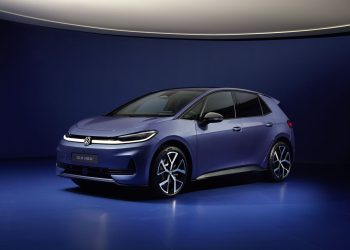
The company examined Volkswagen’s ID.3 electric hatchback. It found that 86 percent of the vehicle’s component value came from EU suppliers. Only about seven percent originated in China.
Therefore, the ID.3 would easily qualify under the proposed EU Auto Rules.
The Renault 5 electric vehicle presents a more complex picture. Renault says that most suppliers for the car operate within 300 kilometers of its assembly plant in northern France.
However, A2MAC1’s analysis shows that only 51 percent of the vehicle’s component value originates from the European Union. Chinese suppliers account for roughly 41 percent of the cost.
When battery components are excluded, European content rises to about 76 percent. Under those conditions, the Renault 5 would meet the proposed threshold.
Supply chain questions extend beyond China. European automakers also rely on manufacturing hubs in neighboring countries.
Türkiye, for example, hosts major production facilities for Toyota, Stellantis, Hyundai, and Renault. The country has become a cost-effective manufacturing base for vehicles sold across Europe.
Industry representatives warn that excluding Türkiye from EU Auto Rules could harm investment and production across the region. Turkish industry leaders argue that integration with European supply chains benefits both sides.
However, including Türkiye could also create unintended consequences. Some analysts fear that Chinese manufacturers might build factories there to bypass European content requirements.
Such loopholes could undermine the purpose of the new policy. Therefore, European officials must carefully design rules that protect domestic industry without encouraging regulatory workarounds.
The debate highlights how difficult the issue has become. Automotive supply chains have evolved into highly interconnected global networks.
Because of this complexity, even small regulatory changes can produce far-reaching consequences. Policymakers must therefore weigh industrial policy goals against economic and diplomatic risks.
As negotiations continue, the European Union faces a delicate balancing act. Strengthening domestic manufacturing remains a priority.
At the same time, maintaining stable global trade relationships is equally important. For now, EU Auto Rules illustrate the difficult path Europe must navigate as the global automotive industry transitions toward electric mobility.