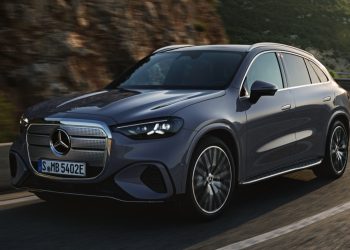
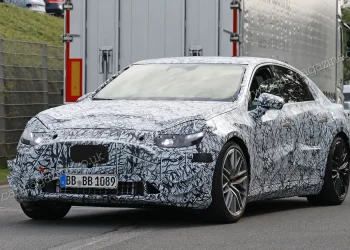
The 2026 Mercedes GLC EV marks a turning point for the German automaker’s electric ambitions. After mixed reactions to its first EQ-branded vehicles, Mercedes is pivoting with a new strategy. The GLC arrives with over 400 miles of range, sleek design, and groundbreaking software built around “Multi-Agent” AI. Positioned against rivals like the BMW iX3 and Audi Q6 E-Tron, the GLC EV is Mercedes’s most important electric launch yet.
Mercedes faced declining sales in China and slower-than-expected EV adoption in Europe and the U.S. The brand needed a fresh approach. Instead of the egg-shaped EQ models, the new GLC combines conventional styling with cutting-edge digital features.
Powertrain and Performance
At launch, the 2026 Mercedes GLC EV will offer two powertrain options:
- GLC 300+ W/EQ Technology (rear-wheel drive): 369 horsepower and 371 lb-ft of torque.
- GLC 400 4Matic (all-wheel drive): 483 horsepower, 596 lb-ft, and a 0–60 mph time of 4.4 seconds.
Both versions can charge from 10–80% in under 24 minutes with a peak rate of 330 kW. An AMG performance version is expected to follow, offering even greater output.
Technology and Interior
Inside, buyers can choose between two massive display setups. The standard “Superscreen” integrates a 10.25-inch digital cluster, a 14-inch infotainment screen, and a 14-inch passenger screen. Higher trims offer the 39.1-inch Hyperscreen, the brand’s largest panel yet, spanning pillar-to-pillar.
Both systems run on the latest MB.OS software, supporting constant over-the-air updates. Features include traffic jam assist, automatic lane centering, and advanced lane-change functions. Optional luxuries range from air suspension and four-wheel steering to massaging seats and matrix LED headlights.
Multi-Agent AI: Mercedes’s Software Revolution
The 2026 Mercedes GLC EV introduces a “Multi-Agent” AI system that blends multiple platforms into one seamless interface. Unlike competitors, Mercedes integrates ChatGPT, Microsoft Bing AI, and Google Gemini-powered navigation.
This approach lets the car choose the best AI source for each query. For example, drivers can ask for restaurant recommendations with outdoor seating, detailed charging instructions, or general information. Mercedes’s in-house AI adds another layer, handling vehicle-specific guidance such as charging compatibility and energy management.
By combining multiple AI systems, Mercedes aims to rival Tesla, Rivian, and Chinese EV makers, who dominate software-defined vehicle experiences.
Market Context and Competition
The GLC EV arrives at a critical time. German automakers face shrinking sales in China and stiff competition from software-driven Chinese brands. Meanwhile, tariffs protect the U.S. market but limit volume. Mercedes needs the 2026 GLC EV to succeed globally, as its earlier EQC failed to gain traction.
Competitors are racing forward. BMW focuses on zonal architectures, while Audi expands its electric SUV lineup. Mercedes believes its advantage lies in AI-powered experiences and efficiency gains in the new CLA EV platform, now carried into the GLC.
Pricing and Launch Timeline
Pricing remains undisclosed, but U.S. buyers should expect higher costs due to European production and import tariffs. Deliveries of the GLC 400 4Matic begin in late 2026, while the GLC 300+ follows in early 2027.
The success of the 2026 Mercedes GLC EV will depend on software performance, pricing strategy, and market reception. On paper, it combines range, luxury, and intelligence at the right moment. Mercedes now needs to execute flawlessly to secure its place in the EV future.