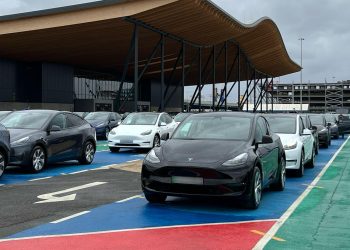
Tesla has significantly expanded its Supercharger network in Utah, with 92 stalls across 8 locations by the end of 2025, a remarkable increase from just 16 stalls at two locations in 2019. This expansion is not just about upgrading existing locations but also building new ones, making EV charging along the I-15 corridor more accessible and convenient for electric vehicle (EV) owners.
Expansion Details: From 16 to 92 Stalls
In 2019, there were only two Supercharger locations between Salt Lake City and Saint George, with just 16 stalls. By 2025, Tesla has expanded the network to include 8 locations, such as Orem, Provo, and Beaver, with a total of 92 stalls. Notably, Beaver now has charging stations at both the North and South Beaver exits, improving the flexibility and convenience for drivers.
In addition to upgrading old stations, Tesla has also built new Superchargers, including a 16 V4 stall station in Scipio, and a new 8-stall V4 station at the North Beaver exit. These stations feature V4 charging technology, allowing for faster and more efficient charging, which is especially useful for long trips like the 270-mile run from Northern Utah to Saint George.
Charging Speed and Accessibility
The most recent V4 stations, such as those in Scipio and Beaver, provide an even better charging experience. For example, in Scipio, 16 V4 stalls have been installed, providing much-needed relief for drivers on the route. Additionally, Electrify America has installed CCS chargers nearby, offering charging options for non-Tesla EVs, including brands like Rivian and Chevy.
As for charging speeds, the V4 stalls bring substantial improvements, allowing for faster charging than previous V3 chargers, and more stations ensure higher availability for those traveling long distances in Tesla Model 3 and Model Y vehicles.
Real-World Charging Experience
On a recent trip, the author noted the increasing convenience of Tesla’s Supercharger network, mentioning that they had never run out of charge over their 168,000 miles of Tesla Model 3 driving. They also shared insights on how to optimize charging efficiency, like using the estimated charge on arrival display and adjusting speed during headwinds to maximize range.
However, not all Tesla drivers are prepared for long trips. The author also recounts seeing a Tesla Model 3 being delivered to the Beaver Supercharger on a flatbed tow truck after the driver failed to account for the vehicle’s energy draw on a grade. This highlights the importance of planning for long-distance charging and ensuring that charging stops are well-timed to avoid running out of power on the road.
Future Outlook
With Tesla continuing to expand its network and offer faster charging options, the company is pushing towards making electric vehicle travel as accessible and convenient as traditional gas-powered road trips. As the network grows, the question remains: Will Superchargers become as ubiquitous as gas stations, with almost every exit on major highways equipped with a charging station? Based on recent trends and Tesla’s strategic expansions, that possibility is becoming more and more likely.
The expansion of Tesla Superchargers in Utah is a significant milestone for the electric vehicle industry, offering faster charging, more stations, and increased convenience for Tesla owners on long trips. With a growing network and the inclusion of non-Tesla options, the future of electric vehicle charging in the region looks brighter than ever.