Tesla has reached a key milestone in its mission to revolutionize transportation. The company has begun testing its Model Y robotaxis in Austin without human safety drivers inside. This move brings Tesla closer to its goal of fully autonomous vehicles, a vision championed by CEO Elon Musk for years. While these robotaxis are still supervised by humans during passenger rides, this development signals a step toward true driverless technology.
Testing the Model Y Robotaxis in Austin
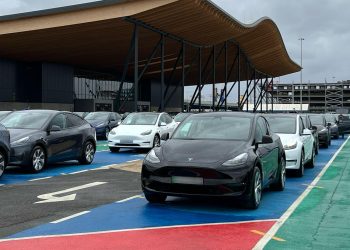
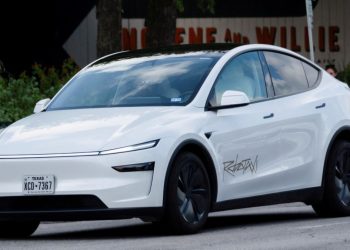
Tesla has started testing its Model Y robotaxis on the streets of Austin using Full-Self Driving (FSD) software. In a viral video shared on X (formerly Twitter), a black Model Y was shown driving smoothly through the city without passengers. Musk later confirmed that the testing phase had begun, exciting Tesla fans and enthusiasts.
Although the robotaxis still have human supervisors when transporting paying passengers, the removal of human drivers during testing represents a major leap. This comes after a limited rollout in San Francisco and Austin, with plans to expand to more cities in 2026.
The Challenges Ahead for Tesla’s FSD Software
Despite the progress, Tesla’s FSD software faces several hurdles. While the Model Ys can navigate complex traffic scenarios with confidence, there have been cases of the cars failing to follow traffic laws. Some Tesla robotaxis have been caught on video breaking traffic rules. Additionally, Tesla reported seven crashes to the National Highway Traffic Safety Administration (NHTSA) after launching human-supervised robotaxis in Austin.
As Tesla plans to phase out human drivers, the FSD software will face its ultimate test. Musk has said that the technology is “pretty much solved” but still undergoing validation. However, the timeline remains ambitious. Musk has historically overestimated delivery times, and many are taking his predictions with caution.
Rivals and Industry Growth: The Race for Autonomy
Tesla is not alone in the race for autonomous vehicles. Waymo, the robotaxi service owned by Alphabet, now operates driverless rides in Austin, Phoenix, San Francisco, Los Angeles, and Atlanta. Waymo has seen an 80% increase in weekly rides, reaching 450,000 rides per week, up from 250,000 six months ago. In contrast to Tesla’s more cautious approach, Waymo has expanded quickly and plans to launch in 11 more U.S. cities by 2026.
Though Waymo’s safety record is not flawless, the company has been a leader in the field. Recently, three Waymo Jaguar I-Paces became stuck after making contact in San Francisco. These incidents are typical as companies refine their autonomous systems.
What’s Next for Tesla and Robotaxis?
The year 2025 has been a milestone for robotaxis, with both Tesla and Waymo pushing forward. Tesla is finally taking meaningful steps toward fully autonomous vehicles, with driverless Model Y robotaxis now testing in Austin.
The coming year will be crucial for self-driving cars. It will determine whether they are a costly experiment or a viable, mainstream mode of transportation. If Tesla can refine its FSD software, it could lead the way and make autonomous rides more reliable and accessible for the public.