A new road charge for electric and plug-in hybrid vehicles (EVs) in the UK has been introduced as part of the government’s ongoing efforts to ensure fairer taxation and fund the future of road infrastructure. Starting in April 2028, drivers of electric vehicles will face a charge of 3p per mile, while plug-in hybrid car drivers will pay 1.5p per mile. This pay-per-mile charge aims to replace the fuel duty for petrol and diesel vehicles, which EVs do not currently contribute to.
How the Pay-Per-Mile Charge Will Work
From April 2028, the road charge will apply to all UK-registered EVs and plug-in hybrids. The charges will be collected annually, typically during the MOT test, where the vehicle’s mileage will be checked. For example, an electric car driver who covers 8,500 miles a year is expected to pay around £255 annually. This amount is about half the fuel tax cost of petrol or diesel cars. The rates for the charge will rise in line with inflation each year.
The government estimates that the new road charge will generate around £1.1 billion in the 2028-29 financial year, with the figure expected to grow to £1.9 billion by 2030-31.
The pay-per-mile charge will be integrated into the existing Vehicle Excise Duty (VED) system, which has been recently updated. Starting from April 2025, electric vehicle owners will have to pay VED for the first time, with the initial charge set at £10 for the first year, and £195 for the second year onwards. Furthermore, electric cars registered after April 2025 that cost more than £40,000 will also be subject to the luxury car tax, which will be £425 annually.
In addition, electric vehicles in London will face the congestion charge from 2026, marking a significant shift in the costs associated with owning an EV in urban areas.
The Ban on Petrol and Diesel Cars
The introduction of this new charge is part of the UK’s broader strategy to achieve net zero emissions by 2050, with transport accounting for over a quarter of the country’s carbon emissions. Starting in 2030, the UK will ban the sale of new petrol and diesel cars, requiring that all new vehicles sold be either electric or plug-in hybrid.
From 2030 to 2035, only hybrid cars will still be available for sale, after which fully electric cars will dominate the market. This policy aligns with the UK’s ambitious climate goals, aiming to drastically reduce emissions from domestic transport.
How Much Do Electric Cars Cost to Buy and Run?
While the new charges will impact the cost of owning an electric vehicle, there are still several financial incentives that make EVs attractive. The Electric Car Grant scheme, which provides up to £3,750 for eligible models priced under £37,000, helps to make EVs more affordable. Additionally, running an electric vehicle can be cheaper than driving a petrol or diesel car. Charging an EV at home, especially during off-peak hours, is significantly cheaper compared to refueling with petrol or diesel.
However, there are concerns about the upfront cost of EVs, which remain higher than traditional vehicles. This is a significant barrier for many potential buyers. Leasing options, however, have grown in popularity, with half of all electric cars now leased in the UK.
Is There Enough Charging Infrastructure?
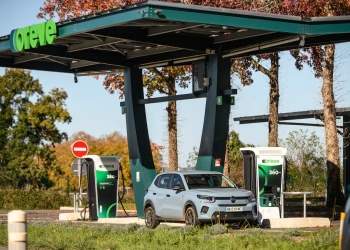
Despite the growing popularity of electric vehicles, concerns remain about the availability and accessibility of charging points. The UK has about 87,000 charging points, spread across 44,000 locations, but these are not evenly distributed across the country. The government has committed to investing an additional £200 million to speed up the rollout of more charging points, especially outside London and the South East.
Why the Change?
This shift towards EVs is crucial for the UK’s net-zero target. Domestic transport is a major contributor to greenhouse gas emissions, and electric vehicles are seen as key to reducing these emissions. With more EVs on the road, and as traditional petrol and diesel vehicles are phased out, the new pay-per-mile charge will help the government recover lost fuel duty revenue while ensuring fair taxation for all drivers.
In conclusion, while the introduction of a pay-per-mile charge for electric cars may increase costs for some drivers, the ongoing transition to cleaner, greener transportation methods is essential for the UK’s long-term climate and sustainability goals.