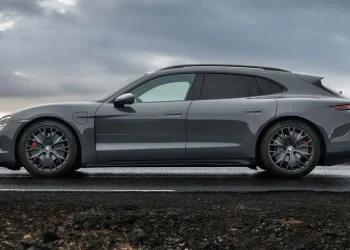
The Porsche EV Rollout Delay sent the company’s shares tumbling by more than 7% on Monday. Investors reacted sharply after Porsche admitted that slowing its electric transition will hurt 2025 earnings. Shares of Volkswagen, Porsche’s parent company, also fell more than 7% as it pledged billions to overhaul its premium lineup.
Profit margins under pressure
Porsche announced that its expected profit margin will shrink from as high as 7% to 2% or less. Executives cited multiple headwinds, including US import tariffs, weakening demand in China’s luxury market, and slower-than-expected adoption of electric cars.
To cope with the downturn, Porsche will delay several new EV models. It also confirmed plans to extend production of combustion engine cars, even though Europe has committed to banning new petrol and diesel sales by 2035.
Shifting EV strategy
In a strategic move, Porsche said that a new SUV line, originally planned as fully electric, will now launch only with combustion and plug-in hybrid options. Current staples like the Cayenne and Panamera will remain available with non-electric engines well into the next decade.
This signals a broader recalibration of Porsche’s strategy. The brand, which introduced its first electric concept Mission E nearly a decade ago, appears to be slowing its transition to full electrification.
Competition and global market challenges
The Porsche EV Rollout Delay highlights the struggles facing European automakers. Companies like BMW and Mercedes-Benz are cutting costs to stay competitive as Chinese manufacturers such as BYD and XPeng intensify a global price war.
In China, average car prices have dropped nearly 19% over the past two years, falling to about 165,000 yuan ($23,190). For European luxury carmakers, this environment makes it harder to sustain high margins while also investing heavily in electrification.
Outlook for Porsche
The combination of weak demand, trade barriers, and rising competition has forced Porsche to rethink its EV roadmap. While the company insists it remains committed to electrification in the long term, its near-term focus will shift toward hybrids and updated combustion models. For investors, the message is clear: Porsche’s ambitious electric timeline will take longer to deliver results.